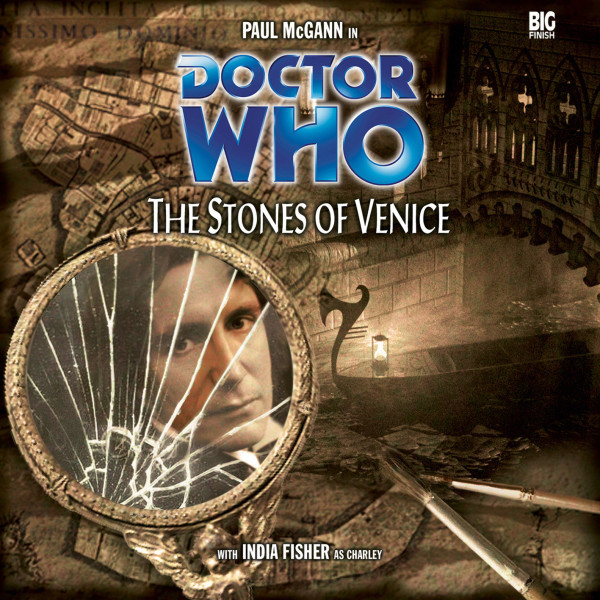
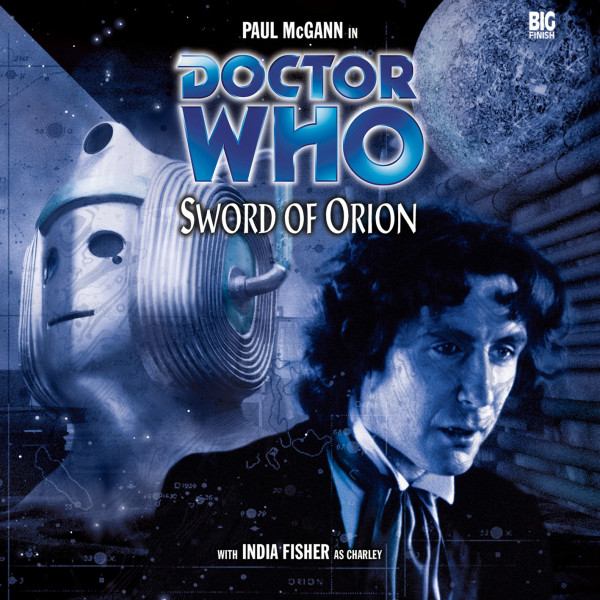
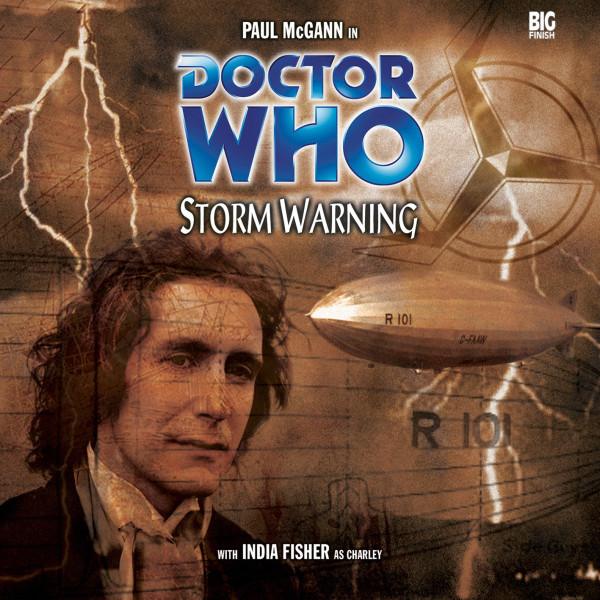
Storm Warning

Before continuing, please be aware that all of this content is made possible by the goodwill and support of my backers on Patreon. If you enjoy the work on this site, please consider supporting the creation of more content like this by clicking the button.
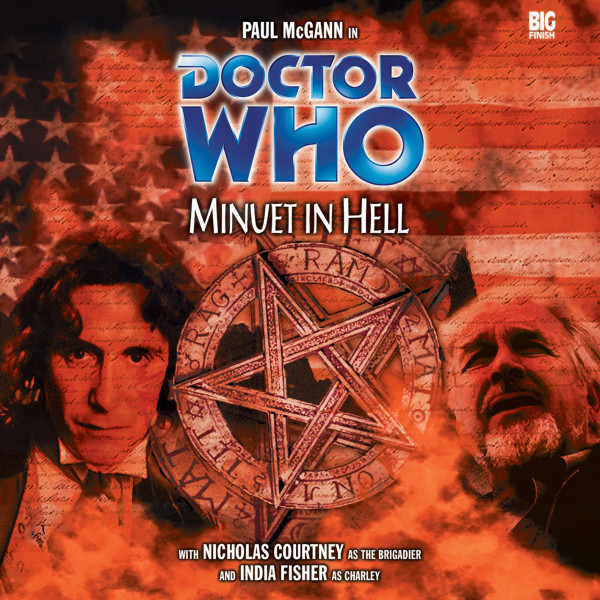


Okay. Deep breath. This one’s gonna hurt a little.

Storm Warning is one of those stories that’s somehow everything to me and also… not quite enough. Like a love letter written on a napkin—gorgeous sentiment, but smeared with soup. This was the Big Finish debut of Paul McGann’s Eighth Doctor, and it had an entire era resting on its floppy Edwardian shoulders. So let’s be real: the plot? Mid. But Paul? PAUL. Is. Divine.

He floats into this story with the detached melancholy of a man who’s spent too long in libraries at the end of time. He’s all romantic detachment and Wildean sighs, orbiting a lonely sadness, and from the first second he speaks, I was hooked. This is my Doctor. No arguments, no debates. Just me, clinging to his velvet coat and begging for one more monologue.

And then—Charlie. Charley Pollard. Charlotte “I-faked-my-passport-and-smuggled-myself-onto-a-doomed-airship” Pollard. She enters like she’s been here for seasons already, full of life and pluck and that perfect ‘just preposterous enough’ energy that makes a Doctor Who companion pop. India Fisher nails it. I love her immediately. She’s brilliant, brave, a little bit full of herself, and absolutely doomed—which, of course, makes her irresistible. The whole paradox thing? That she was supposed to die on the R101, but doesn’t? Already gives their relationship way more emotional weight than most New Who pairings get in entire seasons. She’s the impossible girl before Moffat trademarked it.

But yeah… the plot. Oh dear.

So we’ve got an airship, some mildly fascist British aristocrats, a couple of time-bats called Vortisaurs (not joking), and an alien race that feels like a mood board from a forgotten Star Trek pitch meeting. There’s some stuff about caste systems, creators vs uncreators, and a lot of “No, Doctor, you mustn’t interfere!” It wants to be a political thriller meets high-concept time mystery, but it ends up feeling like two radio plays awkwardly stapled together. And by Part Three, I could feel the script checking its watch.

The good news? The sound design slaps. Claustrophobic airship corridors, roaring engines, the metallic groan of time unraveling mid-storm. The atmosphere builds just enough pressure to keep you focused, even when the alien subplot is putting you to sleep with its exposition. There’s weight in the background noise, even when the plot forgets to carry it.

There’s still magic here, though. When the Doctor chooses to save Charley—knowing full well he’s creating a paradox—he does it anyway. No Time Lord arrogance, no lecture about laws of time. Just a man refusing to let someone die. It’s beautiful. It’s reckless. It’s why I love him.

So yeah. It’s a shaky opener. But like most beginnings, it’s not about where we start—it’s what this kicks off. And this? This is the start of something brilliant.

Final Verdict:
The characters crackle, the setting creaks, and the story… stumbles. But the emotional core lands.
3.5 out of 5 time‑tangled airships.

The Mutant Phase

Before continuing, please be aware that all of this content is made possible by the goodwill and support of my backers on Patreon. If you enjoy the work on this site, please consider supporting the creation of more content like this by clicking the button.


Imagine the Daleks—those chrome supremacists—reduced to panicked bodies dripping with horror because their DNA betrays them. That’s the genius behind The Mutant Phase: it swaps extermination swagger for body-horror chaos, and it actually works.

We crash-land into darkness: the Fifth Doctor, Nyssa, and Tegan arrive on post-invasion Earth, then get flung centuries forward into a Dalek-occupied future that’s gone psychotic. These aren’t confident conquerors—they’re mutant freaks, part-wasp abominations clinging to sanity as their shells split beneath glowing, insectile fury. It’s visceral—and entirely unnerving.

Key moment: the bite. Nyssa gets stung early on—no melodrama, just blur, pain, betrayal. But by Act Two, that sting is a narrative time-bomb. Every wheeze, every trembling pause, ties back to it. When we land the reveal—hard, resonant, earned—it doesn’t feel like fan-service. It’s tight plotting with emotional teeth.

Dalek horror: a first. Hearing them scream in distorted static, begging for escape from their own mutation… it’s delicious. “Even the Daleks fear the mutant phase,” as Ptolem grimly notes. That cracking voice, the Emperor pleading for salvation—it’s gold. Their purity complex is the perfect setup for horror when their own blood betrays them.

Nyssa is the emotional pivot. She’s terrified, but not passive. She maps infection, she counters it, she lives it. She’s not a damsel in distress—she’s the surgeon in the operating theatre while the world burns. And when she stands up to the Doctor’s panic? That moment clicks. Her strength is quiet, but it echoes.

The Doctor is unraveled. Davison sells guilt like a wounded parent whose child’s in trauma. He’s not flippant; he’s fragile. That guilt over Nyssa’s silent scream—that’s the emotional epicentre. No heroic speech, just raw human failure trying to patch cosmic damage.

Audio’s the killer feature here: metal groans, Dalek screams morphing into feverish white noise, Nyssa’s cough echoing down hollow plates. The station trembles underfoot. It’s fully immersive terror.

Yes, the paradox about Dalek Emperor traveling back to preserve timeline is classic Briggs—tight, smart, but a titch neat. Minor noise in an otherwise intact machine.

Tegan and Ptolem exist, but don’t overshadow. They’re cogwork. Doesn’t matter—they fuel Nyssa’s arc, reinforce the stakes. This is Nyssa and the Doctor’s story, with the station collapsing around them.

Wrap-up? No happy reset. The station implodes, they escape wounded. Nyssa carries the cure in her veins. The Doctor carries failure in his heart. Perfect.

Final verdict:
This Dalek yarn isn’t just another extermination tale—it’s horror, guilt, mutation, and survival. The Mutant Phase injects real fear into the Daleks, stitches it to Nyssa’s flesh, and leaves the TARDIS crew forever changed.
4 out of 5 screaming mutant Daleks. 

The Holy Terror

Before continuing, please be aware that all of this content is made possible by the goodwill and support of my backers on Patreon. If you enjoy the work on this site, please consider supporting the creation of more content like this by clicking the button.


Imagine a medieval theocracy run like a sitcom, but the punchlines are executions and the pope is also your dad—and possibly a robot. Welcome to The Holy Terror, where the Sixth Doctor and his absurdly delightful companion Frobisher (yes, the talking penguin from the comics—don’t question it) land smack in the middle of a fortress of inherited murder rituals, divine succession, and oh yeah, a godchild who’s a little too real for comfort.

Right out the gate, this story swerves into the weird lane and floors it. We’ve got cults, torture, divine right politics that make Game of Thrones look like a PTA meeting, and a whole ecosystem of characters who all think they’re fulfilling sacred roles… until the roles start rewriting themselves. The entire premise feels like Robert Holmes ghostwrote a Terry Gilliam script on a Red Bull binge, and I mean that as a compliment.

The Sixth Doctor is in top form here. He rolls in with that theatrical bombast, spouting wit and moral outrage, and then—he’s wrong. He’s deeply, horrifyingly wrong. The twist isn’t just plot-level; it’s metaphysical. The Doctor thinks he understands the rules of this place and tries to solve the mystery like it’s a Scooby-Doo episode. But this castle isn’t following laws of logic—it’s following laws of narrative. Sacred narrative. And when he finally realizes the danger, it’s too late. He’s gutted emotionally and spiritually, which is a rare, delicious thing to watch happen to Six.

And then there’s Frobisher. Yes, he’s a penguin. No, he’s not comic relief. Okay, he is, but only until the story punches you in the soul through his arc. His chirpy banter gives way to a devastating confrontation with faith, guilt, and responsibility. Honestly, the emotional climax doesn’t belong to the Doctor—it belongs to Frobisher. It’s his tragedy. And that’s a twist no one saw coming.

The supporting cast is grotesquely brilliant: child gods, scheming clerics, robot scribes. Their dialogue teeters between Shakespearean grandeur and dry sitcom absurdity. And somehow, it works. The horror here isn’t just blood and sacrifice—it’s the horror of blind obedience, of roles so calcified that people forget they’re acting.

Tonally, it’s a minefield. One minute we’re laughing at snide court banter, the next we’re in a nightmare of psychological torment and divine horror. And yes, the tonal jumps can be jarring. But that’s the point. This isn’t a smooth ride; it’s a theological rollercoaster through narrative trauma.

The sound design is phenomenal: echoing vaults, ritual chants, screams that sound far too real. It creates a sonic cathedral, gorgeous and terrible. The climax, when godhood is revealed as abuse in mythic clothing, is devastating. And then… silence. It lingers.

Final Verdict:
A biting, brutal satire of religion, narrative, and morality, dressed in absurd costumes and wielding emotional gut-punches. Frobisher is a legend. The Sixth Doctor bleeds. And the audience wins.
4 out of 5 demonic penguin sidekicks.

The Shadow of the Scourge

Before continuing, please be aware that all of this content is made possible by the goodwill and support of my backers on Patreon. If you enjoy the work on this site, please consider supporting the creation of more content like this by clicking the button.


Okay, buckle in, because The Shadow of the Scourge is that weird frat party you attend at a multi-genre convention: Bug-demon worshippers, occult cross-stitch, a wounded Doctor in existential free fall—and Benzie Summerfield just strolling around dropping archaeology hot-takes. Somehow it mostly works, even though it’s a shaggy mess shoved into a five-disc set.

First off: Ace. She’s got less to do than Siri in airplane mode. She spends half the story wandering around deaf, playing the world’s worst game of ‘Guess Who?’ while yelling, “WHAT DID YOU SAY?” It’s supposed to be funny. It’s not. It’s like someone stuck a whoopee cushion on the waking-up scene during a séance. Meanwhile, Bernie (yes, that Benny) absolutely steals the show with sarcasm, brains, and just enough sass, breezing past Ace like an archaeologist who booked first-class.

The Seventh Doctor starts in full Wheel-Within-Wheel mode—cryptic, proud, impatient, yelling about betrayal like he’s auditioning for a Shakespearean villain. But then: BOOM the big plan fails, the wheel shears off, and he’s lying in a hospital radiator pretending he’s never heard of regeneration. It’s glorious. That moment where the Doctor loses? Priceless. He’s human-sized for once, and it hits harder than a volcanic ash cloud.

When he’s knocked out, we get some trippy mind-palace sequences: abstract little vignettes of guilt, memory, time shadows, enough weird to give you chills. It’s experimental in the best way, like David Lynch getting a Dalek cameo. That section actually lands—poetic, strange, interesting. We need more of this punk surrealism in Doctor Who.

Then comes the Scourge—giant mantis-demon fanatics with eight legs and Broadway villain energy. They’re meant to be terrifying but end up feeling like pantomime actors in a bug costume shouting, “FEAR ME, MORTALS!” Not great. And their origin as metaphors for religious fanaticism? Heavy stuff. But the script fumbles it, tipping between sarcastic, scary, and sitcom in sixty seconds flat. It’s tonal whiplash designed to make your ears bleed, not your soul feel.

Best part? The audio design when the Scourge possess people: breathy whispers, weird chanting, melodic distortion—woah. That’s the venom. That’s the savor of weird I came for.

And despite everything, the trio works. The Doctor’s desperate. Ace’s stubborn toughness flickers through, even as she’s reduced to deaf jokes. And Benny? She’s a badass with split personality and spunk, never overshadowed. Plus, hearing McCoy revert to cracked-the-surface fragile is rare—and so satisfying.

Final Verdict:
It’s messy. It’s tonal. It’s not always fun. But it’s also weird, brave, and unevenly brilliant. If you can stomach the whiplash, there’s enough weirdness and pathos to make you glad you didn’t skip disc four.
3.5 out of 5 interdimensional mantis-mayhem