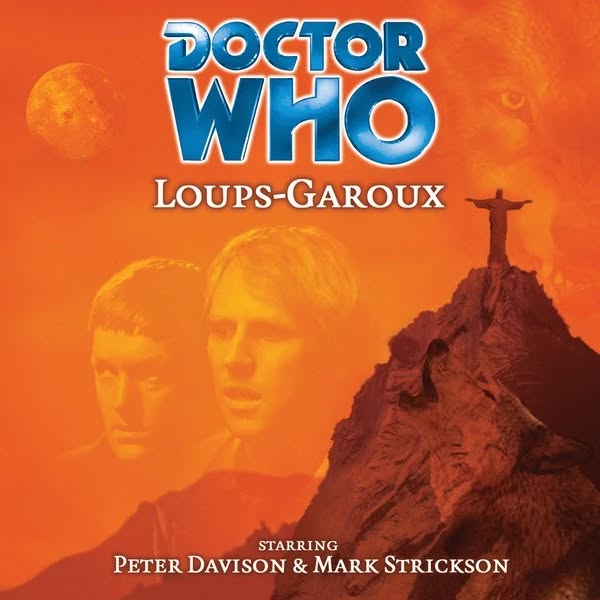
Loups-Garoux


Before continuing, please be aware that all of this content is made possible by the goodwill and support of my backers on Patreon. If you enjoy the work on this site, please consider supporting the creation of more content like this by clicking the button.


Let me preface this by saying: I am a sucker for werewolves. Not the snarly CGI ones with zero brain cells and a sad backstory about full moons and missed prom dates. No, I mean the ancient, tragic, dignified type—the kind that lopes between metaphor and myth. The kind that Loups-Garoux delivers like a gothic blood-slicked valentine straight to my soft, gooey horror-loving heart.

The story’s as streamlined as a silver bullet: Ileana de Santos (tragic noblewoman, werewolf, gothic icon) is on the run from Pieter Stubbe, a literal ancient werewolf boogeyman voiced like someone gargling velvet and old grave dirt. She’s got a kid. There’s a train. The Doctor and Turlough accidentally crash the furry party somewhere in future-Brazil where the rainforest is a memory and everyone is acting like Snowpiercer meets The Jungle Book but sexy.

And look—Peter Davison is finally given something meaty. This isn’t cricket tea and space bureaucracy. This is feral Davison, desperate Davison, staring down millennia-old monsters and throwing himself into myth with that quiet steel that makes you remember why he was ever cast after Tom ‘Eyebrows of God’ Baker.

The werewolves in this aren’t monsters. They’re memory. They’re bloodlines. They’re full of longing and dignity and scent metaphors. They describe the Doctor’s smell like he’s a doorway to a place they’ve never been, and if that line doesn’t stir something poetic and primal in you, congratulations—you might be a Cyberman.

Rosa is here too, our human link to a forgotten tribe and a fate-tied prophecy, and she’s easily one of the best written one-shot characters Big Finish has ever done. She has an edge, a softness, and purpose in every line. Even Turlough gets some actual material and not just snarky ginger padding. Miracle.

Sure, there’s a scene where a literal werewolf sprints alongside a train like he’s auditioning for Fast & Furry-ous. But honestly? I clapped. That’s what we’re here for. Give me the madness, as long as it howls pretty.

My only real nitpick—if I have to scrape for one—is that the 2050 Brazil setting is barely touched. The world’s changed, but the story doesn’t really use that. It’s more Agatha Christie on claws than anything sci-fi. But maybe that’s the point. Maybe myth doesn’t need tech—it needs intimacy. Sweat. Teeth. Breath.

Final Thoughts:
Loups-Garoux isn’t just a werewolf story. It’s a romance. It’s a lament. It’s an old song played on cracked bones and moonlight. And maybe it’s not reinventing the wheel, but it polishes it so damn well I want to ride that thing straight into a doomed love story.
5 out of 5 nostalgic wet dog smells 

Minuet in Hell


Before continuing, please be aware that all of this content is made possible by the goodwill and support of my backers on Patreon. If you enjoy the work on this site, please consider supporting the creation of more content like this by clicking the button.


Imagine writing a Doctor Who script after watching a Southern Gothic soap opera, swallowing a thesaurus, and forgetting what show you’re writing for. Welcome to Minuet in Hell, where the Devil might be in the details—but the real horror is the pacing.

So here’s the pitch: we’re in Malebolgia, the 51st state of America because of course we are, where people in powdered wigs scream about demons, and a televangelist named Gideon Crane thinks he’s the Doctor. Except, oops—so does the actual Doctor, who’s locked in an asylum with no memory, jabbering exposition to anyone within five feet. Meanwhile, Charlie is also lobotomised-lite, wandering around delivering diary entries like she’s auditioning for an off-brand Jane Austen reboot.

Oh, and demons. There’s a satanic cult pulling strings behind the scenes, led by the governor (because democracy is dead, clearly), and they’re doing Hell-themed psychological experimentation. Because if your horror cliché bingo card didn’t already have mental asylum, satanic ritual, and evil evangelist, don’t worry—they remembered all three. Badly.

Let’s not forget Brigadier Lethbridge-Stewart, who gets hauled in for fan service, contributes almost nothing, then disappears into the noise. Seriously, this is like inviting the Brig to dinner and seating him at the kids’ table, then forgetting to serve dessert. Unforgivable.

The Doctor spends a good 60% of this story either:
– Being gaslit by Southern-accented goons
– Arguing with another guy pretending to be the Doctor
– Moaning in confusion about his lost identity

And let’s be clear, Paul McGann does his damnedest. He tries to wring nobility and drama from a plot that’s crumbling like a wet cardboard mansion. But every time he gains traction, someone yells “MY LORD, THE BEAST AWAKENS!” and the whole thing nosedives into carnival nonsense again.

Eventually, we get to the plot twist: the demons aren’t demons—they’re aliens called the Hellfire Club or the Beelzeblobs or something equally subtle—and their influence has been corrupting people’s minds through psychic whatchamajigs. There’s a weapon, there’s a countdown, there’s some convoluted finale where Gideon (fake Doctor guy) sacrifices himself in the most melodramatic way possible. Then… the story just stops. Like an off-switch. No denouement, no satisfying payoff. Just “you’ve been listening to Big Finish” and a slow crawl of disappointment.

What’s tragic is that the concept could work—Doctor Who has done religious hysteria, identity loss, and psychological horror brilliantly before (The Mind of Evil, The Deadly Assassin, Midnight). But this? This is like reheating all those leftovers in a broken microwave and wondering why it tastes like regret.

Final Verdict:
Overacted, overwritten, and overlong. It mistakes loudness for tension and gothic theatrics for drama. And worst of all, it sidelines McGann and Charlie when they were just starting to shine.
0.5 out of 5 lobotomised neurons

The Stones of Venice


Before continuing, please be aware that all of this content is made possible by the goodwill and support of my backers on Patreon. If you enjoy the work on this site, please consider supporting the creation of more content like this by clicking the button.


Picture this: the Doctor and Charley float into Venice as though it’s been soaked in rosewater and heartbreak. This isn’t Doctor Who: Sci-fi Edition—it’s Doctor Who: Gothic Opera With Blood Tincture. If that makes you grin, you’re in exactly the right boat.

Let’s be honest: the plot isn’t reinventing the wheel. We’ve got a sulking Count pining over a lost love, statues that moan like they’re auditioning for an avant-garde horror show, and canals that look like they might swallow you whole. The Castle of Otranto is playing in the background, Bela Lugosi is definitely somewhere off-stage whispering, and the only thing missing is someone dramatically fainting onto plush velvet. But, and this is key—it knows it. It leans into that full-throated gothic cheese with such relish, you begin to crave it.

Acting? Gorgeous, melodramatic, and utterly committed. The Count spools his tears like silk thread. Every gasp is a symphony, every line drenched in tragic elegance. This is velvet-and-velour acting, topped with a black-lacquer train of vampy emotional stakes. And you feel it. It’s theatrical, fugitive from subtlety—and that’s the point. It’s a beautifully ridiculous joyride.

But did it hit me more than Storm Warning or Sword of Orion? Damn straight. Because it wasn’t trying to be grim or noir or commentary on robot wars. It wanted to dress up, light candles, and sing the lurid ballad of lost aristocrats. And it nailed it. It’s like someone handed the franchise its opera glasses and said, “Look, do something this pure.”

Venice, as captured here, is Venice. The creak of ancient floors, distant church bells echoing through mist, footsteps in empty alleys—it’s gothic Venice time-warped with all the whisper of dark secrets. The background design isn’t just setting; it’s breath. When a statue moves? You hold your breath. Every ambiance chord lifts the whole thing skyward.

And it’s Charley and the Doctor who make it soar. She’s the cool-eyed skeptic navigating through opulence that’s rotting at the edges. He’s the romantic with a heart weighed down by centuries, sighing about how art perishes while love shouldn’t. Their banter is light, then suddenly sharp—exploring love’s power to kill or heal with a sideways glance. It earns its moment when the Count’s secret survives the final reveal, and the Doctor quietly says nothing. Instead, he offers Charley a look that says, “It was always about the beauty of the moment.”

Let’s be clear: you won’t remember the plot points next week. You will remember the drip of candle wax in a frescoed hallway, the way Charley’s voice wavers when she says “romance,” the Count’s voice crescendoing like a dying opera. That’s how the story works.

Final Verdict:
Lavish in its camp, heartfelt in its melancholy, and unapologetically dramatic. The Stones of Venice is the opera the TARDIS needed.
4.5 out of 5 decadent gothic swoon-fests

Sword of Orion

Before continuing, please be aware that all of this content is made possible by the goodwill and support of my backers on Patreon. If you enjoy the work on this site, please consider supporting the creation of more content like this by clicking the button.


Right, so Sword of Orion is the Big Finish equivalent of a battered metal lunchbox: no frills, faintly radioactive, but surprisingly nourishing once you bite in. The plot’s not reinventing the sonic screwdriver—derelict starship, shady salvage crew, mystery war background hum—but the execution is clean, creepy, and carried by a cast that commits like they’re on an audio stage in front of a God.

We’re two stories into the Eighth Doctor and Charley’s Big Finish era, and the chemistry between them is already approaching sonic boom levels. McGann is playing it cool—Oscar Wilde if he’d been exiled to a space hulk—but with a flicker of sadness behind every sentence. He’s clearly seen too much, but still shows up in velvet, ready to save lives and quote Shakespeare while doing it. Charley, on the other hand, is less just-along-for-the-ride and more “about to punch a Cyberman for being rude.” Her energy is infectious—plucky, brave, and absolutely not asking for the Doctor’s permission to do anything.

And while they shine, let’s talk about the supporting cast, because honestly? They’re the surprise MVPs. These grungy space haulers and jittery mercenaries aren’t cannon fodder caricatures—they feel like people. Tired people. People who’ve been through five wars and are still getting yelled at by management. It grounds the story. You can smell the engine oil and union dissatisfaction.

Plot-wise, it’s solid meat-and-potatoes stuff. The Orion War—humans vs. androids—is more backdrop than centrepiece, but there’s a sharp thematic edge lurking just under the hull plating. The androids, it turns out, don’t love being treated like appliances. Shocker. Their fight for recognition echoes real-world liberation struggles, and while the script doesn’t go full manifesto, the point lands. You can feel the story wants to dig deeper, and even when it doesn’t, you’re left imagining a darker, smarter version lurking in the shadows.

And those shadows? That’s where the Cybermen live.

They don’t get much screentime, but when they do, it hits. There’s a claustrophobic sense of dread that starts early and never fully leaves. The sound design carries a lot here—static crackles, distant thuds, metallic groans like the ship itself is haunted. It’s old-school horror done through headphones, and it works. These Cybermen aren’t the loud clankers of modern TV—they’re patient, eerie, and deeply unsettling.

There are minor stumbles, of course. The Doctor never gets a true philosophical smackdown with the Cybermen, and the android rights angle is more garnish than entrée. But the story knows its lane—grimy, tense sci-fi with just enough substance to keep your brain twitching between jumpscares.

Final Verdict:
A strong step up from Storm Warning, Sword of Orion blends classic horror with smart character beats, even if the subtext gets left on standby. Tense, textured, and a little tragic—it may not be groundbreaking, but it absolutely earns its stripes.
4 out of 5 cyber-reanimated corpses with union demands.