

Before continuing, please be aware that all of this content is made possible by the goodwill and support of my backers on Patreon. If you enjoy the work on this site, please consider supporting the creation of more content like this by clicking the button.
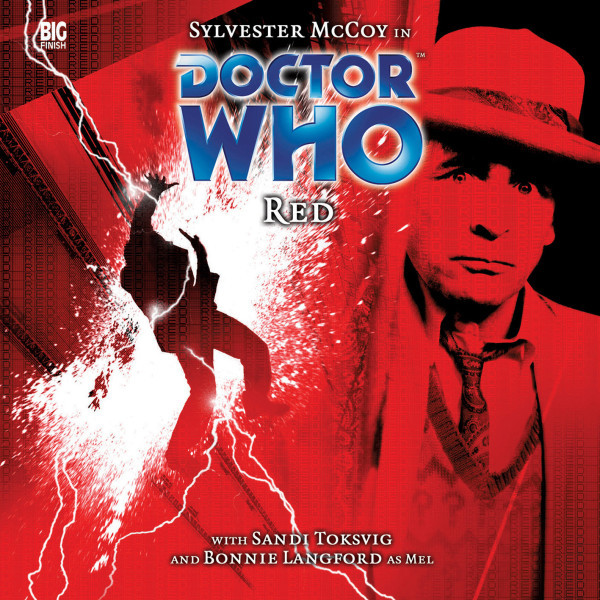
Red is the kind of story that sounds interesting when you describe it in a sentence, but collapses like a flan in a cupboard when you actually listen to it. “What if a society installed chips in everyone’s heads to suppress violent impulses—but the impulses fought back and became a psychic murder disease?” That’s the pitch. And, sure, that’s fine. It’s the kind of mid-tier cyberpunk premise that screams Doctor Who does Philip K. Dick but with fewer drugs and more shouting. Unfortunately, it’s also about as much fun as watching a photocopier slowly run out of toner.
The Seventh Doctor and Mel land in this antiseptic dystopia where emotion is regulated, conformity is mandatory, and the color red (subtle title drop!) is basically banned because it triggers aggression. The society’s central computer, the SafeSpaceBot3000—sorry, “the Link”—monitors everyone’s minds to make sure no one gets any ideas about punching or, god forbid, feeling. And yet, naturally, a virus of repressed violence emerges. It’s called “Red,” it kills people, and it’s exactly as subtle as you think it is.
On paper, this could’ve been a sharp psychological horror. The tension between repression and expression, control and chaos—there’s meat there. But Red just goes through the motions, ticking off every dystopian cliché with the enthusiasm of someone doing a tax return. Rebellious citizens who fetishize violence because it’s forbidden? Check. A tyrannical AI that speaks in soothing tones while committing mass murder? Check. The Doctor giving a big speech about humanity’s potential right before the system explodes? Triple check.
Sylvester McCoy gives it his usual gusto—rolling his Rs like he’s auditioning for “Most Dramatic Scotsman Alive”—but it tips over into parody. You can almost hear him twirling an invisible umbrella, declaiming about moral decay while the script snoozes behind him. Bonnie Langford, bless her, actually tries to inject warmth and compassion into the story, but Mel is given so little to do that she’s mostly there to gasp, look appalled, and occasionally say, “Doctor!” like she’s hoping that’ll fix the pacing.
What does work is the soundscape. Credit where it’s due: the audio design is lush. Metallic echoes, electronic heartbeats, humming corridors that sound like they’re breathing—there’s an eeriness to it that suggests a better story hiding somewhere in the mix. The score, too, has this melancholic hum that perfectly suits the sterile horror of the world. It’s just… wasted on a script that mistakes repetition for depth.
There are flashes of ambition—tiny moments where the story almost says something about societal repression, or the seductive nature of violence—but it never commits. By the time the Link is destroyed and everyone’s suddenly “free,” it’s less catharsis and more “oh, thank god, it’s over.”
Final Thoughts:
If Red were a person, it’d be that one philosophy student who thinks saying “violence is part of human nature” is profound. It’s not. It’s just obvious.
Rating: 2.5 out of 5 funny neural inhibitors short-circuiting while the Doctor monologues about peace.