

Before continuing, please be aware that all of this content is made possible by the goodwill and support of my backers on Patreon. If you enjoy the work on this site, please consider supporting the creation of more content like this by clicking the button.
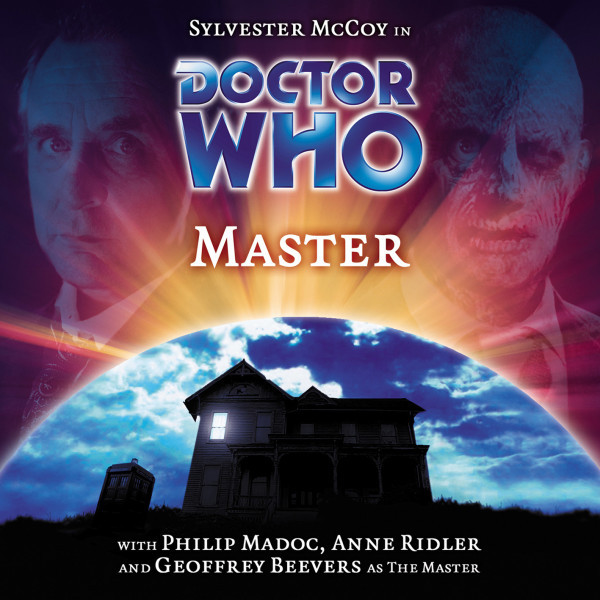
Somewhere out there in the time vortex, in a crooked little corner where clocks tick backwards and morality is a fever dream, Master is still playing. A dinner party, a corpse or two, a slow-burn philosophical deathmatch between the Doctor and the Time Lord equivalent of a war crime in eyeliner. It’s not just gothic horror, it’s operatic nihilism with candlelight—and you’re the last guest to arrive.
We open on Perfugium, which might as well be Latin for “emotional damage.” The Master has amnesia and is living as a charming small-town doctor named John Smith. (Yes. Again. You’d think the universe would’ve run out of those by now.) He’s hosting a dinner party for some local colleagues-slash-victims when in strolls the Seventh Doctor, grinning like he knows where all the bones are buried. And he does. Because he buried them.
There’s a catch. Always is. Years ago, on a battlefield lost to time and retcons, the Doctor made a deal with Death herself—literal, cloak-wearing, soft-voiced capital-D Death. In exchange for his life, one child would be condemned to darkness. Guess who? Yeah. That’s the real horror: the Doctor didn’t create the Master, but he sure as hell gave him a nudge in the right (read: wrong) direction.
From there, it spirals. Murder stalks the corridors. Shadows lengthen. Death plays with wine glasses and souls. The Master’s lost memories begin to unspool like a film reel on fire. The guests vanish, the lies fall apart, and what remains is two men standing in the wreckage of who they might’ve been, arguing about whether evil is a choice or an inevitability. Beevers delivers every line like he’s chewing through velvet-covered barbed wire: delicate, painful, beautiful. McCoy? Lethal in a whisper. He’s not here to save the day. He’s here to reckon.
This isn’t about laser beams or intergalactic MacGuffins. It’s about consequence. About what happens when identity isn’t just something you choose, but something you inherit. The Master could walk away. He could stay John Smith. He’s offered that path. But he chooses to remember, to reclaim the name, to step back into the dark with eyes wide open. And that’s the tragedy: not that he’s damned, but that he damns himself, fully aware, because he can’t bear not to.
The story gets a bit sweaty in the final act—Philip Madoc’s turn into frantic exposition-machine feels like someone swapped the script with a soap opera and hoped no one noticed. But even that doesn’t kill the mood. By then, the foundations have already cracked, the wine is blood, and the party’s over. All that’s left is truth, and it’s rotting.
Sound design? Perfectly haunted. Thunder rolls, doors creak like they’re in pain, and Death’s voice dances across your skull like a lullaby made of knives. And the script? Oh, it knows it’s writing for the stage, not the screen. It wants to talk to you. Lecture you. Seduce you. And it succeeds.
Final Verdict:
Master isn’t just a story—it’s a mirror held up to the worst parts of ourselves and whispered, what if you wanted it? A beautiful, brutal, operatic horror show. It sings like a requiem for the friendship that could have been.
5 out of 5 cursed dinner invitations left unopened in the postbox.