Lurkers at Sunlight’s Edge


Before continuing, please be aware that all of this content is made possible by the goodwill and support of my backers on Patreon. If you enjoy the work on this site, please consider supporting the creation of more content like this by clicking the button.
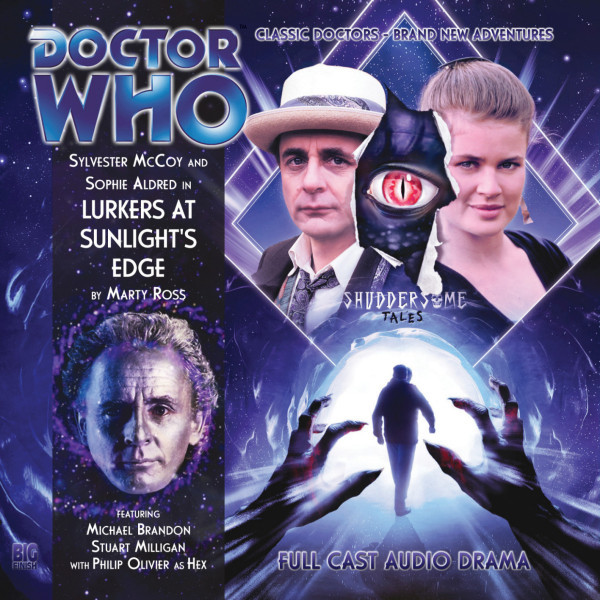


Lurkers at Sunlight’s Edge is what happens when Seventh Doctor, Ace, and Hex Schofield wander into Antarctica and accidentally trip over a very polite, very British homage to cosmic horror. Specifically the sort pioneered by H. P. Lovecraft.

And when I say homage, I mean this thing is wearing Lovecraft’s skin like an enthusiastic theatre kid who just discovered eldritch tentacles and the word “cyclopean”.

The setup is deliciously pulpy. The TARDIS crew tag along with an Antarctic expedition that is very clearly going to end badly because this is Doctor Who and also Antarctica is basically a giant narrative sign that reads HERE BE ELDRITCH NONSENSE. While the Doctor and Ace poke around the frozen wasteland, Hex gets captured by members of the expedition who turn out to be a cult hoping to resurrect some very ancient alien god-things buried under the ice.

Which is exactly as comforting as it sounds.

Meanwhile the Doctor and Ace meet C. P. Doveday, a nervy little pulp writer who contributes lurid horror stories to a magazine called Shuddersome Tales. Subtle? No. Entertaining? Absolutely. Doveday is such an obvious stand-in for Lovecraft that you can practically hear the typewriter keys clacking every time he opens his mouth.

The fun of the story is watching the Doctor realise something is off about him. Because of course it is. This is cosmic horror. If there is a nervous writer hanging around an Antarctic expedition, he is either about to be eaten by a tentacle monster or secretly working for the tentacle monster.

Spoiler: it’s option two.

As the mystery unfolds, the expedition’s true agenda becomes clear. Beneath the ice are alien entities that have been dormant for millennia. The cultists want them awake. Hex is essentially a sacrificial prop in their little resurrection ceremony, which is a rough day at the office even by companion standards.

The big reveal that Doveday is basically a meat puppet for the sleeping aliens will surprise absolutely nobody who has read even a single Lovecraft story. The vibes scream Mi-Go shenanigans from about fifteen miles away. The plot beats are predictable, but they are also executed with enough atmosphere that you don’t really mind. Snowstorms howl. Ancient ruins loom. People whisper about things that should not be named.

It’s cosy cosmic horror. Which sounds like a contradiction but honestly fits Doctor Who perfectly.

Thematically, the story leans hard into Lovecraftian ideas about forbidden knowledge and the terrifying insignificance of humanity. The difference is that the Doctor refuses to accept that cosmic nihilism. Where Lovecraft would shrug and say humanity is doomed, Seven smirks and rewrites the ending. It becomes a clash between bleak determinism and stubborn hope.

Which is very Seven.

Still, the one lingering frustration is that the story never really subverts its influences. It celebrates Lovecraft. It recreates Lovecraft. But it rarely twists the knife in a new direction. You keep waiting for the Doctor to flip the cosmic horror table over and shout “Actually we’re doing something weird now!” and it never quite happens.

So you finish it thinking: that was good. Atmospheric. Lovingly crafted.

But it could have been stranger.

Final Thoughts
A wonderfully frosty Lovecraft tribute packed with atmosphere, eldritch nonsense and cultists who absolutely need better hobbies. It’s fun, well performed, and dripping with pulp horror vibes, but it plays its cards a little too safely to become something truly mind-bending.

3.5 out of 5 suspicious Antarctic cult robes.
A Death in the Family


Before continuing, please be aware that all of this content is made possible by the goodwill and support of my backers on Patreon. If you enjoy the work on this site, please consider supporting the creation of more content like this by clicking the button.


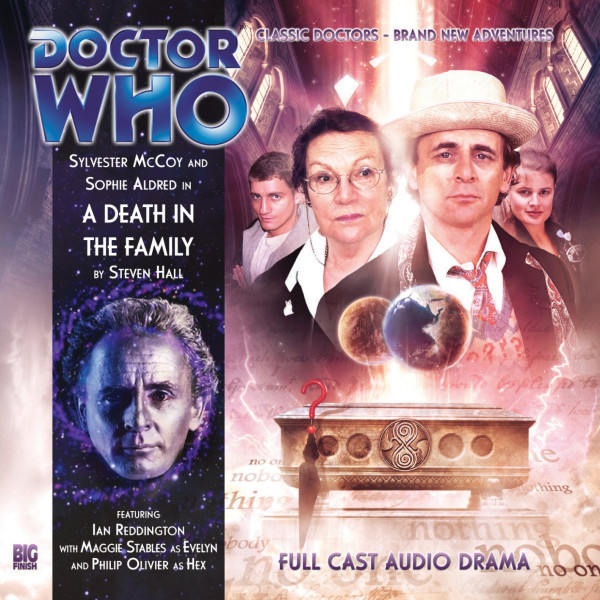
A Death in the Family wastes absolutely no time politely clearing its throat. It kicks the door open, unleashes a god-tier chaos gremlin onto modern-day Earth, and then murders the Seventh Doctor before you’ve even settled in with your tea.

Yes. That happens in episode one.

Enter Nobody No-One, the Word Lord. A being on the same cosmic shelf as the Celestial Toymaker, except instead of nursery-rhyme whimsy he wields linguistics like a switchblade. Words are his atoms. Syntax is his battlefield. He feels like someone spliced the manic petulance of The Master (John Simm flavour, unhinged grin included) with the theatrical cruelty of a pantomime god. He doesn’t just want to win. He wants to unwrite you.

When he forces a dying soldier to state that “nobody can make the Doctor die and not regenerate”… well. You see where this is going. Semantic loophole. Verbal trapdoor. The Doctor dies. No golden glow. No triumphant music. Just silence.

I actually sat there, headphones on, staring at the wall like: excuse me??? You can’t just do that. That’s illegal. There are RULES.

But this is a story about rules. And about how language shapes reality.

Episodes two and three are grief in surround sound. The companions live on. The universe does not pause. And it hurts.

Hex, freshly gutted by the revelations of Project: Destiny, is taken—by the Doctor’s final instructions—to see Evelyn Smythe. Evelyn. Oh, Evelyn. Older now. Frailer. Still morally titanium. Her scenes are luminous. Even in the twilight of her life, she is fierce, principled, cutting through nonsense like a historian with a scalpel. There is something unbearably tender about her lingering wish that it had been her Doctor. My heart actually did that awful squeezing thing. You know the one.

Meanwhile, Ace spirals in denial. Proper, messy denial. She drags the TARDIS back to Earth, tries to resume a normal life, and it is excruciating. Because she can’t. She’s too Doctor-shaped now. Too alienated from the mundane. Watching her try to fit into a world that no longer fits her is both hilarious and quietly devastating. She’s become him. Eccentric. Disconnected. Living in a box, emotionally and literally.

And through it all, Nobody No-One capers about, twisting idioms into weapons. The final resolution hinges—beautifully—on wordplay. On definitions. On the power of naming. It feels almost Russell T Davies in its audacity: language as salvation, as trap, as magic. Classic Who metaphysics colliding with modern emotional punch.

The themes are thick and deliberate: grief as transformation. Identity as narrative. The ethics of manipulation—because Seven has played his own share of linguistic games over the years. Nobody No-One is, in a way, his mirror. Weaponised cleverness without conscience.

And when the dust settles, what lingers isn’t just the shock of the Doctor’s death. It’s the ache of love. Of companions who were shaped—and scarred—by him. Of words spoken too late. Of stories that refuse to end quietly.

Final Thoughts
A daring, emotionally savage masterpiece that kills the Doctor, dissects grief, weaponises grammar and somehow makes it all sing. A perfect fusion of classic ambition and modern heart.

5 out of 5 weaponised dangling participles.

Project: Destiny


Before continuing, please be aware that all of this content is made possible by the goodwill and support of my backers on Patreon. If you enjoy the work on this site, please consider supporting the creation of more content like this by clicking the button.


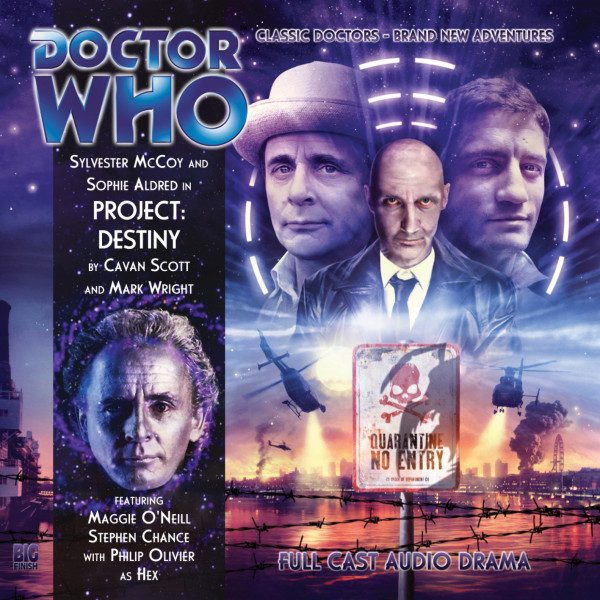
Project: Destiny kicks the door down, drags continuity in by the scruff of the neck, and demands you remember your homework from six years ago or get out.

When we last saw Hex, he’d been shot during the chaos of Skitari. Now it’s the terrifyingly futuristic year of 2026 and he’s bleeding out in a deserted London while the Seventh Doctor and Ace try to get him to St Gart’s Hospital. London, however, has other plans. It’s empty. Militarised. Crawling with insectoid alien horrors that spread through viral contagion like a biological middle finger to humanity.

And looming over all of it is The Forge.

Not cosy, tea-and-biscuits UNIT. No. This is The Forge. UNIT’s edgier, morally compromised mirror, now under the command of the ever-smirking Sir William Abberton. Spoiler: he has not discovered ethics in the interim. If anything, he’s doubled down.

This is not a jumping-on point. This is Big Finish lore at full throttle. Hex is the son of Cassie from Project: Lazarus. The Doctor’s failure to save her carved a permanent scar into his seventh incarnation’s soul, and adopting Hex was never entirely altruistic. That guilt is weaponised here. Nimrod – yes, that Nimrod – peels back the Doctor’s carefully constructed lie and hands Hex the truth like a live grenade.

If you haven’t been following the slow-burn Forge arc, this will feel like walking into the final season of a prestige drama halfway through episode nine. There is history. There are betrayals. There is baggage.

But my word, when it works, it works.

Episode one is almost horror. Abandoned London. Echoing streets. The creeping dread of something skittering just out of sight. Then it escalates into gunfire and quarantine zones and desperate attempts to contain a spreading alien infection. The insect creatures are nasty, efficient and genuinely unsettling. The Doctor, in peak manipulative chessmaster mode, makes the unthinkable decision to work with The Forge to develop a cure… and promptly becomes infected himself. Because of course he does.

Sylvester McCoy is magnificent. Cold, calculating, quietly furious. You can hear the weight of every compromise. Sophie Aldred gives Ace grit and emotional fire. And Philip Olivier’s Hex? This is his crucible. Betrayal lands hard. The revelation of his ties to The Forge is brutal and brilliantly staged.

Thematically, Project: Destiny is about consequences. The cost of manipulation. Institutional amorality versus individual conscience. The Doctor plays games with people’s lives and finally has to look at the damage. The Forge represents utilitarian extremism: survival at any cost. The Doctor claims to be better. This story asks if he really is.

And Nimrod? He is Machiavelli with a lab coat. Every smile hides a trapdoor.

Yes, it is dense. Yes, it demands investment. But it rewards it with scale, atmosphere and emotional gut punches. This is Big Finish firing on all cylinders, unashamedly building its own mythology and daring you to keep up.

Final Thoughts
Continuity-heavy, morally thorny, action-packed and emotionally savage. Not for newcomers, but for those who’ve done the miles, it’s a cracking payoff in the Forge saga.

4.5 out of 5 skittering alien contagion nightmares in a quarantined London.

The Cradle of the Snake


Before continuing, please be aware that all of this content is made possible by the goodwill and support of my backers on Patreon. If you enjoy the work on this site, please consider supporting the creation of more content like this by clicking the button.


The Cradle of the Snake is living proof that somewhere in the Big Finish offices, someone looked at a whiteboard covered in potential returning villains and said, with a straight face, “You know what the fans are crying out for? More Mara.”

The Mara.

The whispery snake demon from Kinda and Snakedance. The villain whose defining character trait is hissing vague platitudes about fear while occasionally manifesting as a carnival prop. When modern Who came back and everyone was clamouring for the Rani or Omega or literally anyone with an ounce of cultural cachet, I do not recall a groundswell of “Bring back the big psychic snake!”

And yet here we are.

This time, the Mara decides to possess the Fifth Doctor, because apparently Tegan’s therapy bills were not high enough. To his credit, Peter Davison absolutely throws himself into it. His Doctor becomes snide, cruel, gleefully unpleasant. He wanders around picking emotional scabs and, at one point, wrecks a man’s fairground tent for no reason other than pure demonic spite. It is like watching your kindly cricket teacher suddenly decide arson sounds fun.

Is it bold? Sure. Is it fun to listen to for two full episodes? Debatable.

Meanwhile Tegan Jovanka and Nyssa are left doing the emotional heavy lifting, because the Mara and Tegan have history. There is a genuine thematic seam here about trauma, about old wounds reopening, about how fear never quite leaves you. The Mara feeds on insecurity, on ego, on spectacle. It thrives in crowds whipped into fervour.

Which is presumably why the plot swerves into televangelism.

Yes. Possessed Doctor decides his next career move is becoming a television preacher. There is a mad scientist with a machine that turns thoughts into reality, because why not. The machine externalises the Mara into a gigantic snake that slithers around eating people. The possessed Doctor grins. The crowd gasps. Somewhere, subtlety files for divorce.

Poor Vislor Turlough exists largely to be told to shut up. Repeatedly. It becomes almost a running joke. Almost. If the script seemed aware of how little it is doing with him, it might even count as satire.

Instead, everything just escalates. More shouting. More hissing. More grand speeches about fear and belief and the darkness within. The Mara is meant to be a manifestation of inner demons, of colonial guilt, of the seductive lure of power. On paper, that is rich thematic soil.

On audio, it mostly sounds like an overcaffeinated snake yelling into a megaphone.

And then the resolution hinges on a conveniently discovered yin and yang counterpart to the Mara who just happens to be hanging around. Because nothing says “ancient cosmic embodiment of evil” like being thwarted by a last minute metaphysical plus one.

By the end, I was not gripped. I was not chilled. I was contemplating whether voluntarily cuddling a moderately venomous reptile might provide a quicker, cleaner conclusion to proceedings.

Final Thoughts
A bombastic, sermonising comeback for a villain who did not need one, packed with noise, spectacle and very little genuine bite. Davison is game. Janet Fielding tries valiantly. The Mara remains a hissy fit in search of a point.

1.5 out of 5 overexcited psychic snake sermons.