The Apocalypse Element


Before continuing, please be aware that all of this content is made possible by the goodwill and support of my backers on Patreon. If you enjoy the work on this site, please consider supporting the creation of more content like this by clicking the button.
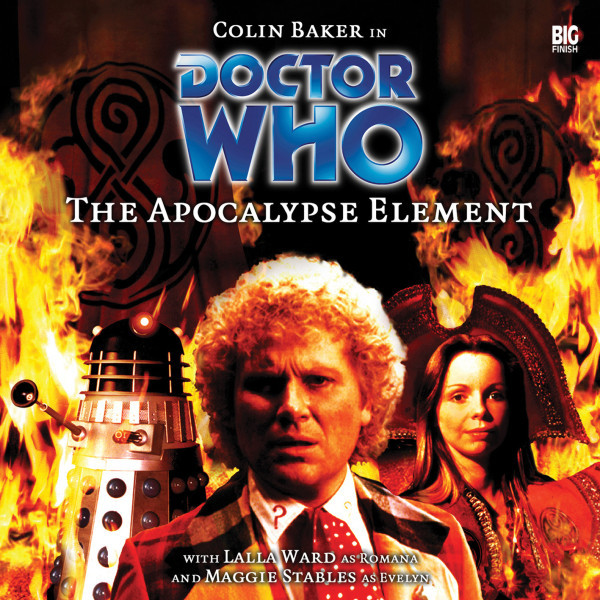


Okay. Strap in. Because The Apocalypse Element is what happens when someone who’s definitely read a lot of old Doctor Who Magazine lore columns gets the keys to the car, floors it into Gallifreyan continuity, and then promptly drives it off a cliff. And instead of wreckage, we get… whatever this is. An explosion of Time Lord politics, Dalek screeching, Evelyn shouting into space, Romana being dragged through the narrative like a reluctant bridesmaid at a regeneration ceremony, and a plot so dense with fanservice it practically wheezes under its own canon.

It wants to be a “major event.” I mean, it’s got everything: a vanished Gallifreyan delegation, a missing Romana, time-scoopy Daleks being Very Evil™, and an ancient cosmic threat that sounds like a Warhammer 40K artifact crossed with a GCSE geography project. Also: the titular “Apocalypse Element,” which is apparently what happens when you cross solar flares with microwave-grade nonsense. Do not attempt to understand the science. There is none. It’s like a student film that tried to adapt The Deadly Assassin and gave up halfway through to LARP as Davros.

The Daleks are… here. They yell. They invade. They monologue like fascist kettles with a thesaurus. I think they want to control time again? Or destroy it? Or redecorate the universe in grayscale? Honestly, their motivations have all the consistency of soup flung at a wall. Their big move this time is hijacking a conference and threatening the universe with timeline genocide. It’s like C-SPAN meets Skaro’s Got Talent.

Colin Baker, God bless him, is trying so hard to steer the flaming wreckage of this plot with his usual velvet bombast, but even he sounds like he’s blinking at the script going, “Wait… we’re in the Eye of Harmony again? Who let the fanfic in?” Evelyn—bless her teapot soul—is just baffled by everything, which is fair, because same. And poor Romana. Lalla Ward deserved better than to be tortured for half the runtime and then stuck reading Gallifreyan technobabble like she’s auditioning for a Time Lord PowerPoint presentation.

There’s no time for atmosphere. No tension. No pacing. Just lore dumps, shouty scenes, and more Big Capitalised Sci-Fi Words™ than a boxset of The Trial of a Time Lord. I kept waiting for something emotionally resonant to happen. Or funny. Or fun. But instead, it’s just “here’s a crisis,” “here’s another,” “suddenly Daleks,” “Romana’s wearing ceremonial Time Lord IKEA headgear,” and then we’re done.

Final Verdict:
If you’ve ever wanted to be bludgeoned with outdated continuity, pompous exposition, and plot threads so tangled they make The Timeless Children look like Blink, this is your stop. Everyone else? Run. You deserve better Time Lord trauma.

1.5 out of 5 untraceable Rassilon relics
Winter for the Adept


Before continuing, please be aware that all of this content is made possible by the goodwill and support of my backers on Patreon. If you enjoy the work on this site, please consider supporting the creation of more content like this by clicking the button.


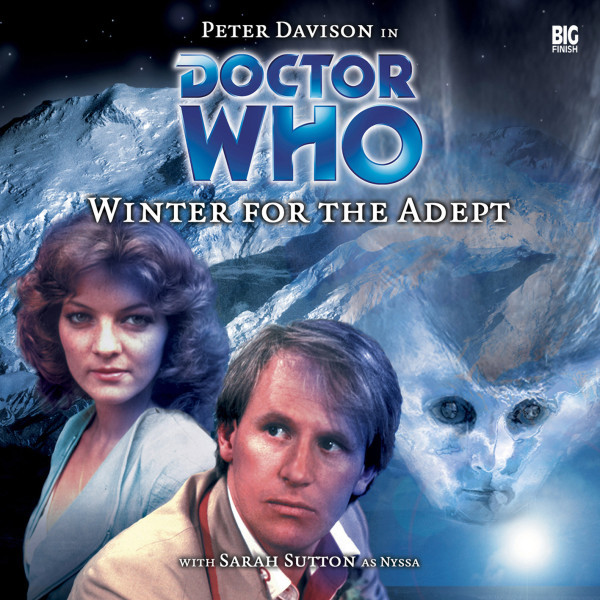
You know that creeping dread when someone says, “We’re doing a ghost story at a Victorian boarding school,” and your soul immediately curls up in a ball because you’ve already seen that episode of Doctor Who? And that one. And… yeah. Welcome to Winter for the Adept, the tenth in Big Finish’s early-run collection of “What if we did the same plot again, but colder?”

We’re in the Swiss Alps this time, because snow is apparently spooky. Nyssa is dropped straight into a mountain Gothic horror setup, all girls’ dormitories and religious repression and rattling tea trays. Meanwhile, the Doctor rocks up like someone wandered in from a better script. There’s a ghost (sort of), there’s psychic nonsense (of course), and by the end there are aliens (because we can’t just have one genre, that’d be too focused).

The twist is that there isn’t a ghost—it’s just latent telekinetic energy left behind by a dead epileptic. Yes, really. That’s the payoff. You sit through 80 minutes of frostbitten tedium, and it turns out the haunting was a paranormal case of bad vibes. There’s also a deranged fundamentalist teacher, because what’s a posh boarding school without a bit of theocracy? But don’t worry—she mostly just yells “God disapproves!” at lesbians and psychic children, then vanishes from narrative relevance.

And then, just when you’re dozing off to the gentle sound of plot inertia, BAM: aliens. The Spillagers! Who are they? Who cares! They crash the party right at the end like uninvited stoners at a séance, get instantly bodied by the Doctor, and leave again. It’s the kind of pointless intrusion that feels like the scriptwriter panicked and googled “Doctor Who mandatory alien quota.”

The dialogue is peak early Big Finish clunk: people shriek things like “Look out, it’s the piano!” with all the urgency of someone announcing a bus timetable. And speaking of the haunted piano—it’s real, it’s dumb, and it literally chases people. Like a ghostly Wile E. Coyote gag, except with zero irony.

The only vaguely noteworthy thing here is the debut of India Fisher as Peril Bellamy (yes, that’s her actual character name). She’ll go on to play Charley Pollard in better audios, but here she’s stuck playing the most annoying telepath since Bester from Babylon 5. The rest of the cast try their best to emote through snowdrifts of exposition, but there’s only so much you can do when half the script is “Look! It’s cold! Something moved!”

This isn’t even camp enough to be fun-bad. It’s just bland, cold, and so aggressively middle-tier that it feels like it was written by an AI trained exclusively on 1980s Target novelisations.

Final Verdict:
Because apparently we can’t do ghosts, boarding schools, telepathy, and aliens without killing the vibe completely.

1 out of 5 haunted pianos

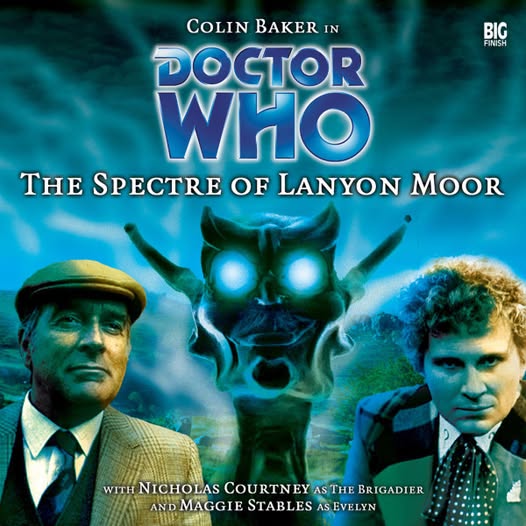
The Spectre of Lanyon Moor


Before continuing, please be aware that all of this content is made possible by the goodwill and support of my backers on Patreon. If you enjoy the work on this site, please consider supporting the creation of more content like this by clicking the button.


It begins, like many great British traditions, with someone getting murdered in the countryside.

The Spectre of Lanyon Moor is what happens when you take the gothic weirdness of folk horror, throw in some aliens, a cranky old aristocrat, and a Doctor in a Technicolor dreamcoat who’s finally found his stride—and then somehow it all works. Miraculously. Grubbily. Comfortably. Like an old stone cottage that probably has three ghosts and a slow-boiling kettle at all times.

Let’s start with the obvious: this one doesn’t reinvent the wheel. It doesn’t even try. But what it does do is roll the perfectly serviceable wheel straight down the foggy hillside of rural Cornwall into a pit full of telepathic glowing alien wreckage and ancient subterranean spite. Which, frankly, is my kind of day out.

Colin Baker, whose Sixth Doctor has often suffered from “angrily yells exposition until someone dies” syndrome, is finally given a story where he can actually breathe—and charm. He’s warm, clever, occasionally testy, but never cruel. And when you pair him with Evelyn Smythe (as always, a joy: witty, grounded, and forever ready to throw academic shade), the dynamic crackles like a log fire after a miserable rainy hike. Their friendship is the cozy heart of this story, and it’s on full display here.

Oh, and did I mention the Brigadier’s here? Yes, that Brigadier. Nicholas Courtney turns up like a warm jumper you forgot you owned and instantly feel better wearing. His interactions with both Evelyn and Sixie are wonderful—full of understated affection, dry humour, and that trademark British resignation in the face of certain death. You could pair him with a haunted eggcup and he’d still make it work.

Now, the actual plot: something spooky is happening around Lanyon Moor, where people are dying, things are glowing, and Sir Archibald Flint—a moustache in search of a brain—is conducting mysterious rituals and being casually racist in the way only posh Doctor Who villains from the countryside can. Yes, he’s absurd. But at least he’s fun absurd, not “menacing Klan cosplayer” absurd. And the twist—that the folk tales are actually about a long-buried alien war criminal with psychic abilities—is handled with surprising restraint.

It’s this blend of local legend and off-world menace that makes the episode work. It doesn’t go full horror (this ain’t Image of the Fendahl), but it also never leans into the “aliens are gods” cliché too hard. It respects the rural setting while keeping the pacing tight and the tone sharp. Also, the supporting cast—normally a Big Finish crapshoot—are uniformly solid, even when their characters are ridiculous.

Final Verdict:
The Spectre of Lanyon Moor doesn’t try to blow your mind. It just delivers a grounded, moody, character-led story with great chemistry, rural mystique, and zero continuity-porn smugness. And in this economy? That’s practically witchcraft.

4 out of 5 subterranean warlocks with trust funds.

Red Dawn


Before continuing, please be aware that all of this content is made possible by the goodwill and support of my backers on Patreon. If you enjoy the work on this site, please consider supporting the creation of more content like this by clicking the button.


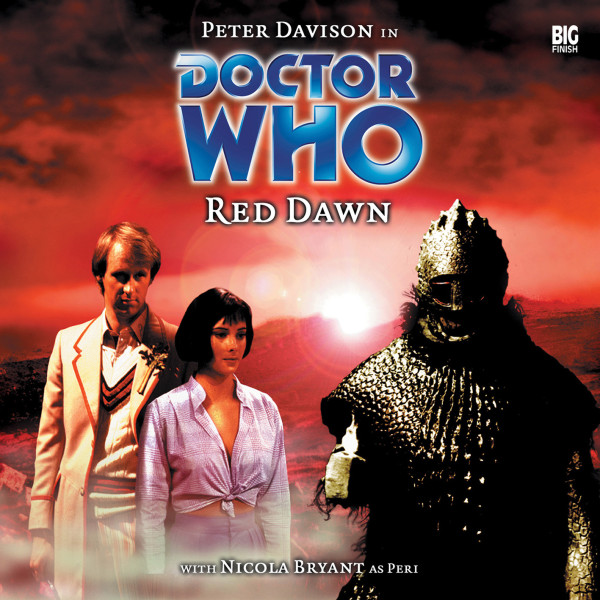
If The Genocide Machine was a damp squib, then Red Dawn is the soggy match that fails to light it. Coming hot on the heels of the delightful The Marian Conspiracy, this eighth installment in Big Finish’s main range is a masterclass in how to squander potential.

The premise is straightforward: the Fifth Doctor and Peri land on Mars and encounter NASA’s first manned mission to the Red Planet. Naturally, they stumble upon a tomb of Ice Warriors who, upon awakening, engage in a series of honor-bound dialogues that make Klingon rituals seem brisk. The Ice Warriors’ code of honor is so overemphasized that it becomes a parody of itself, dragging the narrative into a quagmire of repetitive rhetoric.

The human characters fare no better. Paul Webster, the supposed antagonist, is a caricature of corporate greed, lacking depth or nuance. His plan to exploit the Ice Warriors for genetic experimentation is as uninspired as it is predictable. Tanya Webster, his half-human, half-Ice Warrior sister, is introduced with a hint of intrigue but is ultimately underutilized, her unique heritage serving as little more than a plot footnote.

Peri finds herself in a perilous situation aboard a damaged landing module, but any tension is undermined by the story’s sluggish pacing and lack of stakes. The Doctor, meanwhile, spends much of the runtime as a passive observer, offering commentary rather than action. Even the revelation of the Ice Warriors’ ancestral hero, Izdaal, fails to inject excitement, serving instead as a vehicle for more ponderous exposition.

The production itself is competent, with sound design that effectively conveys the Martian environment. However, the Ice Warriors’ sibilant speech patterns, while faithful to their television portrayals, become grating over extended periods. The score attempts to evoke a sense of grandeur but often feels mismatched with the narrative’s lethargic tempo.

In a range that has shown flashes of brilliance, Red Dawn stands out for its mediocrity. It’s a story that promises much—a return of classic villains, a unique setting, and the exploration of ethical dilemmas—but delivers little beyond a tedious retread of familiar tropes. For those seeking a compelling audio adventure, this one is best left buried beneath the Martian ice.

Final Verdict:
A plodding narrative that fails to capitalize on its intriguing elements, Red Dawn is a forgettable entry in the Big Finish catalog.
0.5 out of 5 Martian snooze buttons.