Robophobia 


Before continuing, please be aware that all of this content is made possible by the goodwill and support of my backers on Patreon. If you enjoy the work on this site, please consider supporting the creation of more content like this by clicking the button.


Robophobia is a title that sounds like someone sneezed while naming a spreadsheet and just committed to the bit, and yet somehow, against all odds, the story attached to it is… actually pretty solid? I know. I’m shocked too.

We’ve got Sylvester McCoy’s Seventh Doctor, in full “I know what’s going on and I’m absolutely not telling you yet” mode, which means half the time he looks like he’s wandered in by accident and the other half he’s ten steps ahead playing 4D chess with your expectations. It’s a vibe. A slightly unsettling, manipulative vibe, but a vibe nonetheless.

And then, HELLO, we meet Liv Chenka, played by Nicola Walker, who walks into this story like she’s been here the whole time and frankly steals every scene she’s in. Competent, grounded, medically inclined, and refreshingly unimpressed by nonsense. You can absolutely see why she goes on to stick around in later adventures.

The setup is deliciously simple. Spaceship. Cargo hold. Several hundred robots. And oh look, they’re acting a bit… murdery.

Cue panic. Cue humans immediately deciding, “yes, the robots are rising up, this is definitely a rebellion, time to panic and/or pre-emptively destroy them.” Which, to be fair, history and sci-fi have trained us to expect exactly that. The story leans HARD into that expectation for the first chunk, playing it straight like a greatest hits album of “robots turn on their masters.”

Except the Doctor is there, quietly side-eyeing the entire situation like, “no. This is too neat. Too obvious. I smell a setup and it reeks.” And he’s right. Because the twist is that this isn’t a robot uprising at all. It’s a frame job. A deliberate attempt to make it look like robots are turning on humanity, so that humanity will respond by wiping out all robotic life. Not robophobia as a quirky fear, but robophobia as systemic paranoia weaponised into genocide. Which is a LOT more interesting than “beep boop revolution.”

Thematically, it lands nicely. Fear of the other. Manufactured panic. The ease with which people will accept a convenient enemy if it confirms their biases. It’s not subtle, but it doesn’t need to be. It’s effective.

Performance-wise, it’s doing the heavy lifting in all the right places. Sylvester McCoy absolutely nails that slippery, enigmatic Doctor persona, keeping you just off-balance enough that when the truth clicks, it feels earned. And Nicola Walker? Instant win. She brings a naturalism that grounds the whole thing, making the stakes feel more immediate even when the plot is playing in familiar territory.

Which, okay, let’s address that. Because while the twist is good, the journey getting there can feel a bit… standard. You are essentially sitting through a fairly by-the-numbers “robots might revolt” story before the curtain gets pulled back. It’s well done, but you might find yourself thinking, “okay, I’ve seen this before,” just before the story goes “aha, but have you seen THIS version of it?”

Also, I did occasionally want it to push further. The ideas are strong, but there’s room to dig deeper into the implications, especially around the human characters and their willingness to buy into the panic.

Still. It works. It entertains. It sticks the landing. And honestly, with a title like Robophobia, that’s already exceeding expectations.

Final Thoughts
A cleverly subversive take on the classic “robot uprising” trope, elevated by strong performances and a solid twist, even if the road getting there feels a bit familiar.

3.5 out of 5 extremely misunderstood robots just trying not to get cancelled by humanity
Rat Trap


Before continuing, please be aware that all of this content is made possible by the goodwill and support of my backers on Patreon. If you enjoy the work on this site, please consider supporting the creation of more content like this by clicking the button.


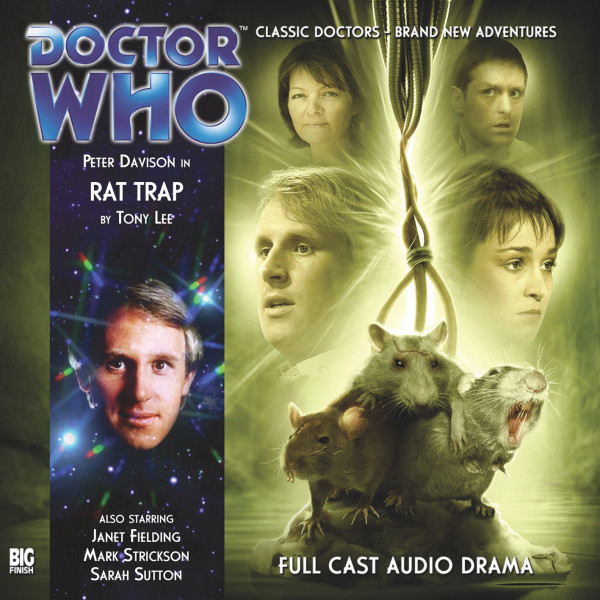
Rat Trap scuttles out of the darkness promising teeth, tension, and maybe a bit of claustrophobic horror… and instead hands me a damp cardboard box full of “oh, is that it?” while faint squeaking noises echo in the distance like my will to care slowly escaping through a drain.

We’ve got Peter Davison’s Fifth Doctor, who at this point feels less like a Time Lord and more like someone’s mildly irritated grandad stuck supervising a school trip gone wrong, alongside Nyssa, Tegan Jovanka, and Vislor Turlough, who continue to radiate the energy of three coworkers forced into a team-building exercise they did not consent to. And oh BOY, you can feel it.

The plot? Urban explorers poking around abandoned WWII tunnels. Which, okay, good start. That’s a vibe. Damp walls, echoes, history bleeding through the cracks, the sense that something old and buried might not want to stay that way. I’m leaning in. I’m ready.

Enter… psychic rats. No, wait, come back, it gets worse.

These are sentient, telepathic rats with a grudge against humanity because they were the result of wartime experiments. Which SHOULD be a slam dunk. There is a version of this story that is a haunting meditation on exploitation, war crimes, and unintended consequences. This is not that version.

Instead we get the most aggressively generic villain energy imaginable. The rats are just… there. They hate humans. They want revenge. They monologue a bit. You could swap them out for Silurians, Zygons, or an angry bin bag with a voice modulator and NOTHING would change. No distinct personality, no unsettling presence, no real sense of threat. Just squeaky resentment.

And the urban explorers? Oh my god. Cardboard. Absolute cardboard. I have seen more depth in a puddle. Every single one of them feels like they were assembled from spare parts labelled “generic horror fodder #1” through “mildly annoying skeptic #4.” You know exactly who’s going to panic, who’s going to get picked off, and who’s going to make the obvious bad decision before they even open their mouths. I am begging for CHARACTER. Just one. A crumb.

Meanwhile, the TARDIS team dynamic continues its slow descent into passive-aggressive hell. Nyssa tries. Bless her. Tegan snaps at everything that moves. Turlough lurks like he’s considering emotionally detaching from the entire concept of friendship. There’s tension, but not the interesting kind. More the “please can HR step in” kind.

And the Doctor? Look, I love Peter Davison, I do. But this performance feels like it’s stuck in neutral. There’s no spark, no bite, no sense that he’s elevating the material. Compare that to the sheer theatrical chaos of Colin Baker or the layered, manipulative depth of Sylvester McCoy or the experimental, wide-eyed energy of Paul McGann, and it just… sits there. Like the rats. Existing. Squeaking. Not doing much else.

Okay, FINE, one positive. I will give you ONE. The giant wheel scene. Yes. The psychic rats force Turlough to run in a massive wheel like some kind of Victorian hamster nightmare and it is SO stupid it loops back around to being incredible. I laughed. Out loud. Full pantomime nonsense. Ten out of ten, no notes, more of this chaotic energy please.

Everything else? Beige. Aggressively beige.

Final Thoughts
A painfully dull story with a decent premise that gets chewed up and spat out by generic villains, flat side characters, and a TARDIS team that feels like it’s one argument away from filing for separation.

1 out of 5 oversized psychic hamster wheels that deserved a better episode built around them

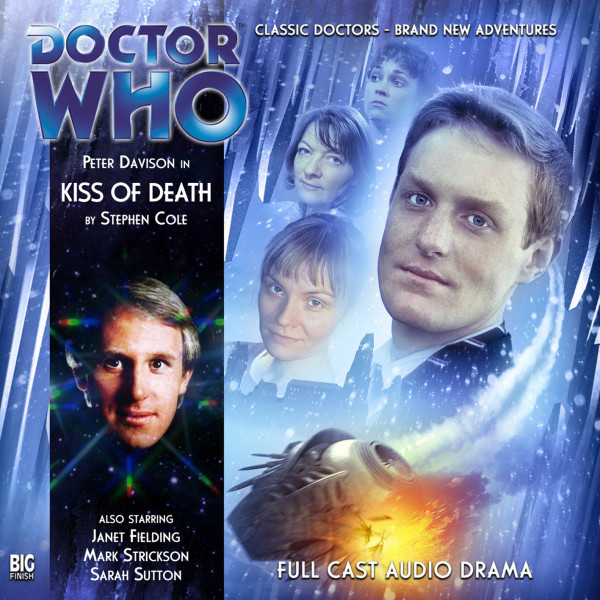
Kiss of Death


Before continuing, please be aware that all of this content is made possible by the goodwill and support of my backers on Patreon. If you enjoy the work on this site, please consider supporting the creation of more content like this by clicking the button.


Kiss of Death drifts in like a damp handshake from someone you don’t remember meeting, smiles politely, and then proceeds to explain its entire personality in the flattest possible tone while I slowly realise… oh no. Oh NO. This is going to be one of those.

You know the ones. Where everything is technically fine but your soul is quietly trying to leave your body out of sheer under-stimulation.

We’ve got Peter Davison back as the Fifth Doctor, still doing that gentle, cricket-clad “please stop making everything worse” energy, alongside Nyssa (competent, kind, tragically underused here), Tegan Jovanka (who deserves better and knows it), and Vislor Turlough…

…ah. Yes. Turlough.

This is very much A Turlough Episode™. Which is great if you’re one of the approximately two people on Earth whose life mission is “more Turlough lore please,” and less great if you’re, you know, conscious.

The plot kicks off with Turlough getting kidnapped by a group of space bank robbers. Already I’m like, okay, heist vibes? Potential? Maybe some tension, some character drama, a bit of spice?

Sure. In theory. Because these robbers are trying to break into his grandfather’s vault, which should be dripping with intrigue and family secrets and oh my god give me anything to latch onto emotionally. We even get a reunion with his childhood love, which SHOULD be juicy, right? Complicated feelings, unresolved tension, longing, betrayal, something??

Instead it’s like watching two mannequins politely acknowledge each other’s existence in a department store.

I am BEGGING for chemistry. Even mild static. A small spark. A static cling sock. ANYTHING.

Meanwhile, the Doctor and the rest of the crew are in pursuit, which should create this nice split narrative of tension building on both sides. Instead it just sort of… happens. Events occur. People move from A to B. Dialogue is exchanged. My brain is gently powering down like a Windows 98 screensaver.

And then, oh yes, the monster.

The vault is protected by this sentient ice/flesh creature, which sounds AMAZING on paper. Body horror! Creeping dread! A living security system that punishes intrusion! This should be the moment where the story goes “surprise, we have teeth.”

Reader, it does not have teeth. It has the vague suggestion of teeth. Conceptual teeth. Teeth that were described in an email but never actually installed.

There’s no real sense of threat. No atmosphere thick enough to choke on. It’s just… there. Existing. Like me, listening to this, wondering if I left the oven on just to feel something.

And that’s the core problem. Nothing is offensively bad. The performances are solid because of course they are, these actors could read a cereal box and I’d applaud. The structure is coherent. The ideas are… ideas.

But it’s all so aggressively bland.

Even the themes, buried somewhere under the beige wallpaper, are trying. Legacy, identity, the weight of family expectations, the idea of emotional “vaults” we lock ourselves inside. There’s something there. There really is.

It just never comes alive. It never breathes. It never matters.

Final Thoughts
A painfully average story that squanders a decent premise and a character-focused setup on a whole lot of nothing. Not terrible, just terminally uninteresting, which somehow feels worse.

1 out of 5 emotionally unavailable space vaults that should have been way more interesting than this 

Heroes of Sontar


Before continuing, please be aware that all of this content is made possible by the goodwill and support of my backers on Patreon. If you enjoy the work on this site, please consider supporting the creation of more content like this by clicking the button.


Heroes of Sontar kicks in the door yelling “GLORY TO THE CLONE BATCH” and immediately trips over its own rifle because oh my god these potato-headed war gremlins are in WAY over their little dome-shaped heads and I am thriving.

We’ve got Peter Davison’s Fifth Doctor, aka the human embodiment of “please can everyone just calm down for FIVE MINUTES,” paired with the iconic chaos quartet of Tegan Jovanka (zero patience, maximum volume), Nyssa (gentle genius, walking moral compass), and Vislor Turlough (still looks like he’s considering a light betrayal as a hobby). It’s a TARDIS team that runs on stress, loyalty, and the constant threat of someone storming off mid-argument.

And then… Sontarans. A whole little battalion of them. Marching, shouting, posturing, doing the whole “we live for war” speech like it’s a personality and not a cry for help. Except something is off. Deeply off. They’ve been deployed to this ruined, desolate planet on a mission they don’t fully understand, and for once the Sontarans aren’t the biggest threat in the room.

Oh no. They’re the prey. Which is DELICIOUS.

Because suddenly all that bluster starts to crack. The story introduces this ancient, shadowy force from Sontaran history, something primal and hungry and VERY interested in collecting a few battle-hardened offerings. And the Sontarans, who usually charge headfirst into danger screaming about honour, are forced into this weird, twitchy state of “wait… what if WE’RE the ones being hunted???” Cue existential crisis in a clone vat.

The plot itself is basically a pressure cooker. The Doctor and friends trying to survive. The Sontarans trying to maintain dignity while absolutely spiralling. And this unseen horror stalking the edges like “yes hello I would like one (1) war species, medium rare.”

And honestly? The atmosphere SLAPS. It’s tense, claustrophobic, and weirdly psychological for a story about angry space potatoes. There’s this creeping sense of inevitability, like nobody here fully understands the rules but everyone’s going to pay the price anyway.

Character-wise, it’s a feast. Peter Davison plays this beautifully understated Doctor who doesn’t dominate the room so much as navigate it, slipping between egos and trying to stop everything collapsing into violence. Nyssa gets some lovely, empathetic moments, Tegan is gloriously DONE with everything, and Turlough… oh, Turlough fits right into this morally grey nightmare like he’s found his people.

And the Sontarans themselves? Weirdly compelling. Stripped of their usual role as one-note villains, they become almost tragic. Conditioned for war, built for obedience, and now facing something they can’t shoot their way out of. It’s like watching a hammer realise not everything is a nail and having a full-on breakdown about it.

But okay, not perfect. The pacing can wobble a bit in the middle, with a few stretches where it feels like we’re circling the same tension without escalating it. And the “mysterious force” is perhaps a little too mysterious at times, like I’m squinting into the void going “hi yes could you maybe explain yourself just a TINY bit more???”

Still. The themes land. Hard. War as identity. The horror of blind obedience. What happens when a species built entirely for conflict runs into something older, deeper, and utterly indifferent to their idea of glory. It’s not just a fight. It’s a reckoning. And I love that for them. Terrifying. But I love it.

Final Thoughts
A tense, character-driven twist on the Sontarans that turns them from punchline villains into something almost… pitiable. Not flawless, but atmospheric, thoughtful, and surprisingly haunting.

4 out of 5 deeply confused clone soldiers questioning their entire life purpose mid-battle