

Before continuing, please be aware that all of this content is made possible by the goodwill and support of my backers on Patreon. If you enjoy the work on this site, please consider supporting the creation of more content like this by clicking the button.
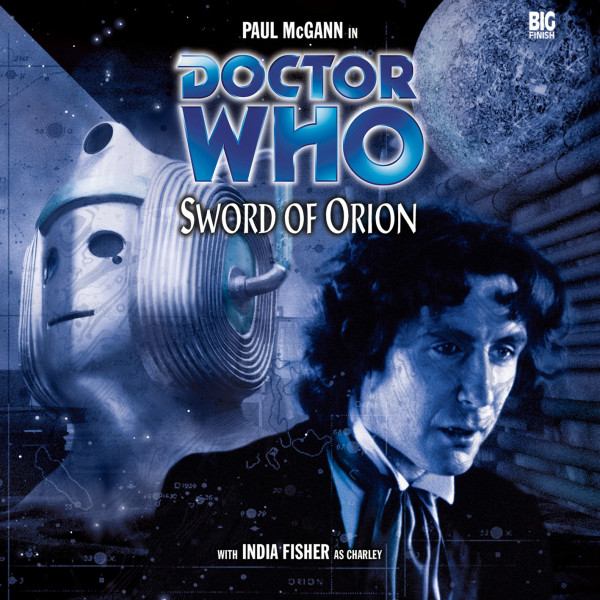
Right, so Sword of Orion is the Big Finish equivalent of a battered metal lunchbox: no frills, faintly radioactive, but surprisingly nourishing once you bite in. The plot’s not reinventing the sonic screwdriver—derelict starship, shady salvage crew, mystery war background hum—but the execution is clean, creepy, and carried by a cast that commits like they’re on an audio stage in front of a God.
We’re two stories into the Eighth Doctor and Charley’s Big Finish era, and the chemistry between them is already approaching sonic boom levels. McGann is playing it cool—Oscar Wilde if he’d been exiled to a space hulk—but with a flicker of sadness behind every sentence. He’s clearly seen too much, but still shows up in velvet, ready to save lives and quote Shakespeare while doing it. Charley, on the other hand, is less just-along-for-the-ride and more “about to punch a Cyberman for being rude.” Her energy is infectious—plucky, brave, and absolutely not asking for the Doctor’s permission to do anything.
And while they shine, let’s talk about the supporting cast, because honestly? They’re the surprise MVPs. These grungy space haulers and jittery mercenaries aren’t cannon fodder caricatures—they feel like people. Tired people. People who’ve been through five wars and are still getting yelled at by management. It grounds the story. You can smell the engine oil and union dissatisfaction.
Plot-wise, it’s solid meat-and-potatoes stuff. The Orion War—humans vs. androids—is more backdrop than centrepiece, but there’s a sharp thematic edge lurking just under the hull plating. The androids, it turns out, don’t love being treated like appliances. Shocker. Their fight for recognition echoes real-world liberation struggles, and while the script doesn’t go full manifesto, the point lands. You can feel the story wants to dig deeper, and even when it doesn’t, you’re left imagining a darker, smarter version lurking in the shadows.
And those shadows? That’s where the Cybermen live.
They don’t get much screentime, but when they do, it hits. There’s a claustrophobic sense of dread that starts early and never fully leaves. The sound design carries a lot here—static crackles, distant thuds, metallic groans like the ship itself is haunted. It’s old-school horror done through headphones, and it works. These Cybermen aren’t the loud clankers of modern TV—they’re patient, eerie, and deeply unsettling.
There are minor stumbles, of course. The Doctor never gets a true philosophical smackdown with the Cybermen, and the android rights angle is more garnish than entrée. But the story knows its lane—grimy, tense sci-fi with just enough substance to keep your brain twitching between jumpscares.
Final Verdict:
A strong step up from Storm Warning, Sword of Orion blends classic horror with smart character beats, even if the subtext gets left on standby. Tense, textured, and a little tragic—it may not be groundbreaking, but it absolutely earns its stripes.
4 out of 5 cyber-reanimated corpses with union demands.