

Before continuing, please be aware that all of this content is made possible by the goodwill and support of my backers on Patreon. If you enjoy the work on this site, please consider supporting the creation of more content like this by clicking the button.
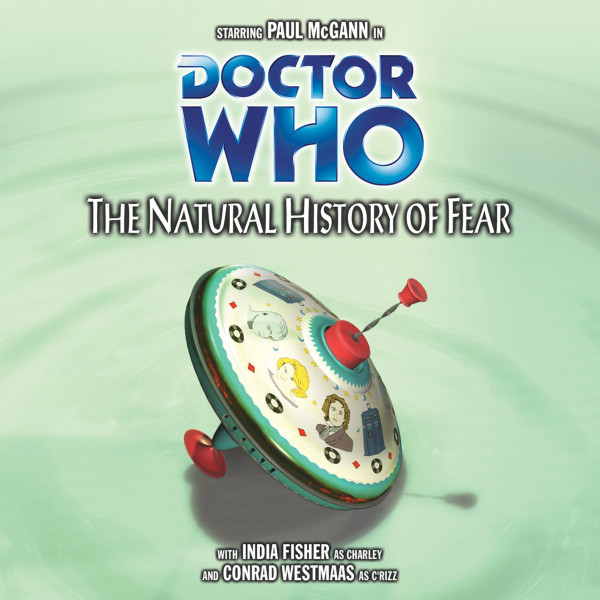
Let’s get real: The Natural History of Fear isn’t Doctor Who’s take on 1984—it’s the story that vaporizes the dictionary on totalitarianism and identity, then rewrites the bones into something that’ll haunt your skull. It’s slick, sophisticated, and subversive, and needs all the spark this review can drain it of.
You’re dropped straight into Light City, a place where the mind is not sacred but a download. Everyone is plugged in, staring blankly at “Infotainments” spewing propaganda. Eyes glaze over, low-level “citizens” vanish, and their personalities get replaced faster than software patches. Asking questions? Crime. Being yourself? Exile or worse.
At the center of this purge is the Editor—yes, no name, just a title, played with icy precision by Paul McGann. His job? Scan psyches for deviation and erase the glitch. India Fisher is cast as the Nurse, quasi-paladin, quasi-medical psych-op, her voice a lullaby code. Conrad Westmaas plays the Conscience—a role as ironic as it sounds. Are they rebels or party apparatchiks? You don’t ever know. They cycle through loyalty and rebellion like spinning coins, and the ambiguity is delicious.
Shockingly, the Doctor, Charley, and C’rizz are absent… until the end. Their brief cameo warps everything. See, Light City’s infotainment feed contains recycled echoes of their adventures—Doctor as myth, Charley as archetype, C’rizz as fringe mystery. These echoes seed a rebellion—not with swords or sabotage, but through cracks in the broadcast: hisses of memory slipping through the cracks, small flickers of recognition. The rebellion is built on echoes of who they used to be, replayed in ghostly loops throughout the populace.
This is where Mortimore’s script slaps you awake—where personalities are not lost but pirated, overwritten into labyrinths of half-truths and broadcast lullabies. The story uses the audio medium as its weapon: whispers, coughs, repeated refrains, looping static. You don’t hear fear. You hear erased fear.
Themes? Tonnes. Free will as an insurgent act. Identity as piracy—someone else’s credentials uploaded into your head. Memory not as truth store, but as unreliable narrator you can distrust. The Doctor’s mere legend becomes revolution’s spark.
Critics and fans lost their collective minds over it, and not in the boring radio voice way. This one gets called masterpiece-of-the-Divergent-Universe territory. One review tripped over itself trying to describe it—a memory puzzle where identities flicker and then collapse.
Compared to the ant-corporatism of Creed of the Kromon, this is Big Finish at its intellectual peak. Remember Scherzo? That was emotional telescoping. This is conceptual thermonuclear.
Final Verdict:
The Natural History of Fear is the sonic equivalent of leaning your head into a riot—thought riot, identity riot, sound riot. It isn’t neat. It doesn’t dazzle. It infects. It’s dizzying, disorienting, brilliant chaos told in whispers.
Rating: 5 out of 5 shattered broadcast loops