

Before continuing, please be aware that all of this content is made possible by the goodwill and support of my backers on Patreon. If you enjoy the work on this site, please consider supporting the creation of more content like this by clicking the button.
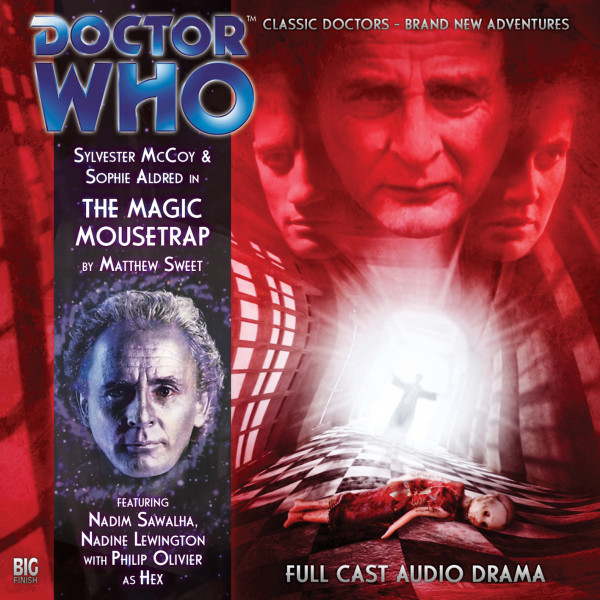
The Magic Mousetrap is a story custom-built to activate my Doctor Who lizard brain: snowbound Swiss cabin, a cast of twitchy strangers, too much silence, and Sylvester McCoy wandering around with no memory like a feral chess master who has misplaced his own board and is now chewing the pieces.
We’re stuck in the Alps. It’s cold. It’s claustrophobic. Everyone is supposedly recuperating, which in practice means they are emotionally brittle, suspicious, and carrying more baggage than Heathrow. The Doctor arrives with amnesia, which for Seven is not a twist so much as a recurring occupational hazard. If this man is not either ten steps ahead or completely lost inside his own schemes, something has gone very wrong.
What elevates this story immediately is the supporting cast. These aren’t just “patients”. They are sharply defined, slightly broken people, each with their own rhythms, anxieties, and tells. You can hear the tension in their voices, the way they circle one another conversationally, the way they flinch when games are introduced. These characters feel like they’ve lived in this space before the Doctor arrived, and that makes the cabin feel real rather than stagey. It is a pressure cooker full of personalities, not just a backdrop for plot.
The obsession with games creeps in slowly. Wordplay. Rules. Structured interactions that feel a little too rehearsed. Ace and Hex are there, but wrong. Not villainous, just unsettlingly calm, nudging events along with the quiet confidence of people who know how this ends. The Doctor, convinced he has stumbled into someone else’s puzzle, does what he does best. He interferes. He investigates. He destabilises everything while congratulating himself for being helpful.
And then the story twists the knife. This was never the Toymaker trapping the Doctor. This was the Doctor trapping the Toymaker. The entire environment, the cast, the games, all of it was part of Seven’s grand plan. The side characters were not random victims, but carefully chosen participants who understood their roles and the risks. That reframes everything. Their patience. Their fear. Their occasional irritation with the Doctor suddenly makes perfect sense.
The cruel irony is delicious. The Doctor wiped his own memory as part of the plan, trusting that his instincts would guide him through. Instead, his curiosity and compassion cause him to dismantle his own trap piece by piece. By the time the Celestial Toymaker finally appears, smug and theatrical as ever, the Doctor has already undone himself. It is spectacularly in character and deeply funny in the bleakest way.
Theme wise, this is Seven at his most honest. Control versus chaos. The arrogance of believing you can account for every variable. The cost of manipulation, even when it is well intentioned. The Doctor as both protector and hazard. The side characters ground these ideas, reminding us that his schemes always involve real people with real consequences.
Performance wise, everyone is firing. McCoy is phenomenal, vulnerable and sharp, confused and dangerous in equal measure. Ace and Hex are quietly devastating. The guest cast sell the atmosphere completely. The sound design and music wrap it all in snow and unease.
Final Thoughts
This is Doctor Who as psychological chamber piece. Clever, chilly, character driven, and unafraid to let the Doctor be the author of his own disaster. I loved it.
Rating: 4.5 out of 5 rigged parlour games played by an amnesiac Time Lord in a Swiss chalet