

Before continuing, please be aware that all of this content is made possible by the goodwill and support of my backers on Patreon. If you enjoy the work on this site, please consider supporting the creation of more content like this by clicking the button.
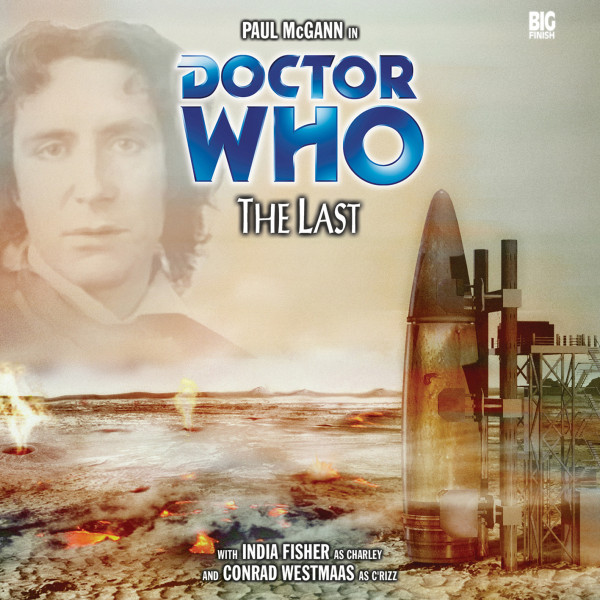
The Last throws the Eighth Doctor, Charley, and C’rizz into a planet scorched by radioactive devastation—like visiting a cosmic graveyard after someone forgot to turn the oven off. They split because, of course, that’s how existential horror gets budgeted. Then, mid-collapse, Charley’s back breaks. Paralyzed. Brutal. Doctor Who with surgical precision to the heart.
Enter Minister Voss, the inscrutable Landscar, and—oh joy—President Excelsior, a leader so delusional she’s hosting victory parades on the bones of the world she destroyed. “Celebrate!” she screams as radiation glitters in the air. It’s horrifying. It’s pitch-perfect satire of hubristic power. Meanwhile, C’rizz starts talking to ghosts—Requiem—the burned survivors of the apocalypse who only he can see. Is it guilt, psychic feedback, spectral projection? It’s genuinely eerie.
The audio design lands like a thundering pulse: the ghost whispers, the buzzing fallout, the distant parade horns, all wrapped in a sonic fog of regret. Landscar drifts around like a memory half-erased, the Doctor tries to pull meaning from wreckage, and Charley…—she’s trapped, screaming courage at gravity. The acting is top-shelf: every gasp, every hesitated breath, sells how small hope feels in an irradiated world.
The themes hit heavy: toxic power, destroyed ecosystems, the cruelty of denial, and guilt-born vision. C’rizz, a survivor made whole by ghosts, embodies trauma’s weight. The Doctor faces the idea that sometimes stopping war isn’t about winning—it’s about mourning those who’ve no world left to mourn. It’s deep.
And yet… something’s off. It reads like a perfect Twilight Zone treatment, distilled into audio form—but it never kicks. No molten surprise, no knockout turn, no gut-rupturing final blow. It treads a dark line beautifully, but stops just short of disemboweling. The reset button gets hit too neatly. Politicians punished, ghost solace granted, planet doomed—but no lingering betrayal, no sequel possibility, no emotional time bomb left ticking long after the final credits.
Will you remember this story in five years? Maybe as an atmospheric piece, but not the one that shattered your ears open. It’s compelling, it’s well-executed, but it doesn’t twist your gut, it comforts it with cold antiseptic.
Final Thoughts:
This story is a funeral procession set to a haunting cello movement—but it never breaks through to make you flinch. Elegant, effective, sombre… but ultimately safe.
Rating: 4 out of 5 victory parades on radioactive graves