

Before continuing, please be aware that all of this content is made possible by the goodwill and support of my backers on Patreon. If you enjoy the work on this site, please consider supporting the creation of more content like this by clicking the button.
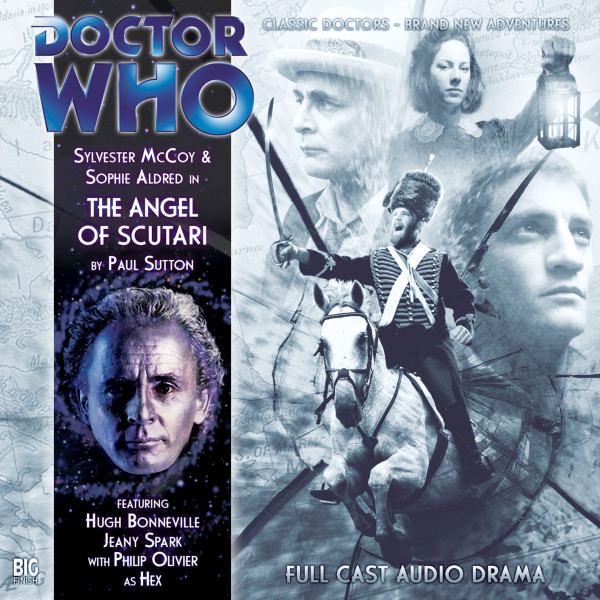
The Angel of Scutari takes the Seventh Doctor, Ace, and Hex, drops them into the Crimean War, immediately rips them apart from each other, and then has the absolute audacity to ask, “So. How much suffering do you think you can emotionally process today?” Spoiler: it is a lot, and you will feel every single muddy, blood-slicked inch of it.
The plot is deceptively simple. The TARDIS misbehaves, because of course it does, and the team is scattered across the 1850s. Hex is fully embraced by the wounded and the medical staff as a ray of competence in a disaster zone, even before Nightingale herself arrives. He’s patched up soldiers, improvised solutions when equipment is lacking, and earned the grudging respect of people who have seen hell and still wade back in every dawn.
Meanwhile Ace has been captured by Russian forces during the siege of Sevastopol and winds up meeting Lev Tolstoy, whose curiosity about literature and combat makes for one of the more bizarre but delightfully weird subplots. She gets herself into and out of trouble with panache, proving her grit even when outgunned and outnumbered. The Doctor, for his part, is being suspected of being a spy — so he does what any time-travelled mastermind does: he intentionally jumps back in time to preserve the exact sequence of events that got him into trouble in the first place. Classic Seven-level nonsense logic with a shiny veneer of “but it makes sense when you think about it chronologically.”
And oh my god, the setting. Big Finish absolutely nails it here. This is one of those audios where you forget you are sitting in a room with headphones on and instead feel like you’re crouched in a tent with canvas walls, listening to the wounded moan and the guns thudding somewhere you can’t see. The research shows. The detail shows. The sound design is doing Olympic-level work. It’s immersive in that quiet, grinding way that doesn’t let you off the hook.
Ace is superb. Sophie Aldred gives her a brittle authority here, someone trying desperately to do the right thing inside a hierarchy that punishes empathy. She’s sharper, angrier, and more tired than usual, and it suits her. But this is Hex’s story. This is the point where Hex stops being “the nice lad from the future” and becomes someone permanently changed by what he’s seen. Phillip Olivier is astonishing. Hex’s competence as a medical volunteer feels earned, but so does his helplessness. He can help, but never enough. He saves some people and loses many more, and the story never glamorises that. You can hear the cracks forming.
The story jumps around in time because history is not neat and neither is this script. One minute you’re in the middle of a hugely tense surgical tent with the aroma of disinfectant pretending it can mask blood and sweat, and the next you’re overhearing Ace and the Doctor hashing out some bone-deep ethical question in what feels like a different war altogether. This non-linear format is very Doctor Who, but it is also dizzying on a first listen, flipping between weeks and months like a cosmic DJ with abandonment issues.
Some of the secondary antagonists (officers, commanders, local aggressors) are written with every aggression dialed up to eleven, like someone forgot to add nuance. They flip from jolly to murderous so fast you begin to suspect they were all cast because they looked vaguely ominous and “could scream on cue.”
But even with those flaws, so many scenes land hard. Quiet conversations. Moral compromises. People doing terrible things because the alternative is watching someone die slowly. The Doctor’s relative absence is deliberate and effective. This is not a story about him fixing history. It’s about people surviving it.
Final Thoughts
This is Doctor Who at its most sombre and humane. Messy, painful, and emotionally heavy, but deeply effective. Ace and Hex are incredible, the setting is haunting, and the story lingers like cold in your bones.
4 out of 5 overworked field hospitals that history insists on romanticising