

Before continuing, please be aware that all of this content is made possible by the goodwill and support of my backers on Patreon. If you enjoy the work on this site, please consider supporting the creation of more content like this by clicking the button.
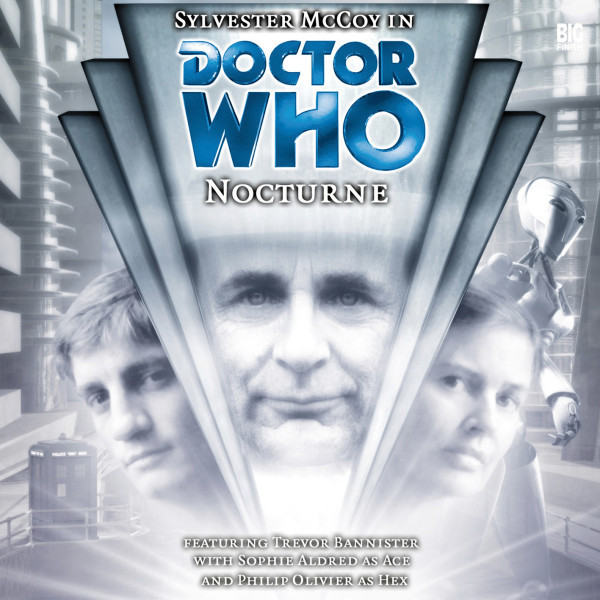
Nocturne sounds like the title of a classy, haunted little chamber piece — you know, candlelight, melancholy, maybe a bit of spectral piano drifting through alien mist. But no. The Doctor arrives in Nocturne, which is basically Space Venice, where a bunch of Space Bohemians and Space artists are living, eking out an existence shoulder-to-shoulder with Space soldiers who’re recovering from the ravages of a Space war nearby. Meanwhile, the streets are stalked by a Space serial killer. In Space. And somewhere along the way, the atmosphere seeps out through a crack in the tone, leaving you with something that’s trying really hard to be profound while tripping over its own melodrama.
It starts well enough. The setting’s dripping with potential — a faded city of art and decay, a world that once sang now echoing only with the ghosts of lost inspiration. You can feel the ghost of The Stones of Venice haunting the walls. But while Venice had wit and tragedy to prop it up, Nocturne has… jazz. And pretentious artists making speeches about the purity of emotion while everyone’s being eaten by a noise monster. There’s an attempt to mix gothic horror with artistic angst, but the result feels like an open mic night at a funeral.
And speaking of déjà vu: this story plays Doctor Who Mad Libs. “A decaying alien cityscape?” Check. “An overzealous military commander shouting about order?” Check. “A sentient sound creature that may or may not be misunderstood?” Check. It’s like someone photocopied five earlier Big Finish scripts until the toner ran out, then glued them together with leftover wine from the bohemians’ afterparty.
The idea of a monster made of music could have been cool. There’s something genuinely eerie about a creature that kills through sound, stalking its prey through vibration and resonance. But the script can’t decide if it’s horror, satire, or a student short film about trauma and art. The tonal whiplash hits full force in the final act, when the Doctor and friends decide the best way to lure out the killer is by performing a spontaneous jam session on kitchen utensils. I wish I were kidding. Pots. Pans. The sound of the Time Lord Philharmonic. I’m not sure what’s scarier — the monster or the image of Sylvester McCoy wielding a ladle like he’s summoning Beelzebub through jazz.
The central theme — the corruptibility of art, the fading of beauty, the guilt of survival — could have sung. Instead, it hums aimlessly, like a radio just slightly off frequency. The performances are decent, the sound design is lush, but the story never decides what it wants to be. It’s not terrible, just deeply unmemorable, which somehow feels worse.
Final Thoughts:
Nocturne wants to be profound and poetic but ends up sounding like a half-tuned piano in a flooded theatre. It’s moody without meaning, clever without coherence, and though it hums with good ideas, it never quite finds the melody. Pretty, hollow, and utterly forgettable.
Rating: 2 out of 5 saucepan symphonies echoing sadly down the canals of Space Venice.