

Before continuing, please be aware that all of this content is made possible by the goodwill and support of my backers on Patreon. If you enjoy the work on this site, please consider supporting the creation of more content like this by clicking the button.
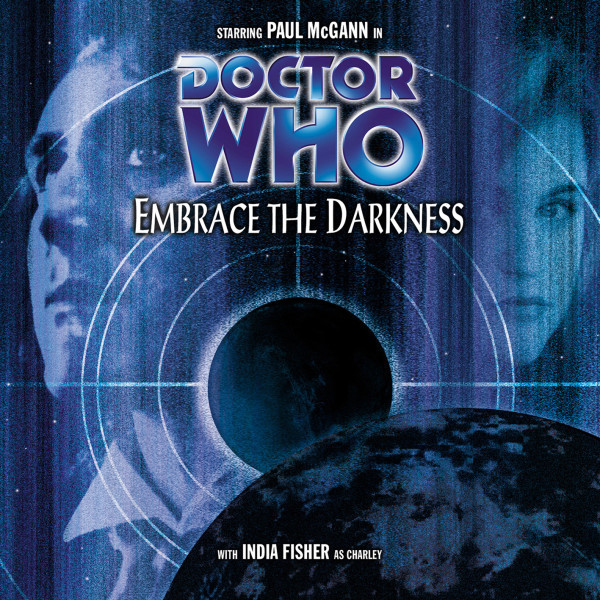
So apparently the Eighth Doctor’s latest holiday idea was “eyeless death base orbiting a dead sun,” which is very on-brand for him. In Embrace the Darkness, the TARDIS slams headfirst into a mining station at the arse-end of nowhere, orbiting a star that’s forgotten how to shine. There’s a rescue team on the way and a whispering alien voice in the dark that sounds like it just crawled out of a broken ASMR tape labelled “do not trust.”
This one’s a tonal pivot from the usual Big Finish buffet of genre samplers. Here, we’re in full-on horror mode. But not in the Hammer-wink way—no, this one commits. It’s grungy, wet, tactile. There are noises in the dark that should not be making noises. It’s Alien meets Event Horizon meets “don’t touch your face.”
The Cimmerians, our eye-slurping gribblies, are terrifying… until they aren’t. Because in true Who fashion, the endgame involves the monsters turning out to be healers, afraid of sunlight, misunderstood, and basically accidentally scooping out a few ocular systems like it’s a cultural faux pas. Classic misunderstanding plot twist. “Oh, we didn’t mean to eat your eyeballs! We’re just sensitive!” is very Season 17-core, and it works, sort of. Still, there’s a faint scent of tonal whiplash. Like being chased by a bear only to find out he just wanted to ask for directions.
The side characters? Surprisingly solid. Commander Orllensa, played by Nicola Boyce, radiates exhausted lesbian commander energy. She feels like she’s one failed mission away from saying “screw this” and opening a candle shop. And the ROSM—military-grade rescue AI with the personality of a bullet—becomes an accidental highlight. Every line it delivers feels like it was programmed by a bureaucratic demon. The scenes where McGann argues with it are pure therapy-bot meets divorce lawyer energy.
Speaking of McGann, he’s still operating on that buttery-throated cusp between Byronic dreamboat and weary old god. His dynamic with Charley continues to deepen, and there’s this lovely, prickly thread running through the story: the Doctor taking too much responsibility. It’s subtle, but you can feel him slipping into the emotional habits we’d later see sharpen in the 2005 revival—shouldering guilt, pushing people away “for their own good,” monologuing to robots about sacrifice like he’s auditioning for Les Mis. And Charley? Still excellent, still underappreciated, and very much the emotional spine of this whole arc.
But here’s the problem: it just doesn’t linger. The setup is grim and unsettling, the execution tight, but once the mystery resolves, it doesn’t leave a psychological bruise. It’s a good story, but not a haunting one. You remember the eye trauma, not the resolution.
Final Thoughts:
This one’s bold. It wants to get under your skin—and for a while, it does. But it never quite brings it home emotionally. There’s no lasting sting, no haunting afterglow. Just a chill that passes once the credits roll. It’s got teeth, but they’re mostly decorative. Still, for anyone craving a good audio scare with a sci-fi twist and an accidental therapy session between a Time Lord and a bureaucracy bot, it’s worth the listen.
3.5 out of 5 tasty, tasty eyes