

Before continuing, please be aware that all of this content is made possible by the goodwill and support of my backers on Patreon. If you enjoy the work on this site, please consider supporting the creation of more content like this by clicking the button.
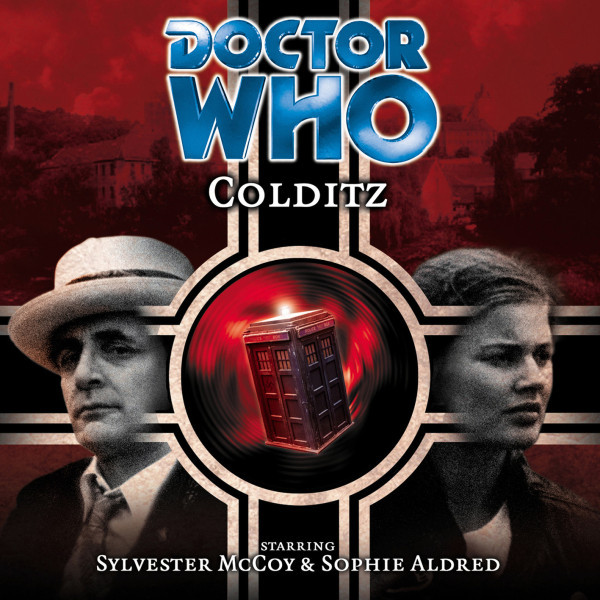
Sometimes Doctor Who slaps you in the face with a rubber chicken. Other times, it carves your heart out with a scalpel while murmuring “oops.” Colditz is the latter. And it’s glorious.
The premise? Straightforward. Seventh Doctor and Ace land inside Colditz Castle, that big spooky Nazi POW camp that history nerds love. It’s 1944, the war is winding down, and within 90 seconds both our heroes are captured by shouty Germans. It should be cliché, right? Nazis, time travel, Colditz… we’ve done this dance. But Colditz doesn’t care about tropes. Colditz lures you into familiar territory, then pulls a grenade pin with a wink.
What unfolds is pure tension ballet. Everyone’s playing three-dimensional emotional chess with a pistol under the table. There’s Feldwebel Kurtz (David Tennant in full pre-Doctor meltdown mode), who’s like a walking therapy session with a gun. He’s twitchy, insecure, desperate to assert dominance—but instead just screams “I peaked in high school.” On the other side is British prisoner Timothy Wilkins, who proves cowardice isn’t a nationality—it’s a lifestyle. Both of them fold under pressure, mirror images of mediocrity on opposite sides of the barbed wire.
And then there’s Ace. Glorious, punk, never-take-your-crap Ace. She immediately joins the POW escape circuit like it’s a summer internship, all while trying not to scream “I KILL NAZIS FOR BREAKFAST.” She’s fierce, but not cartoonishly so—she lies low, she listens, and she burns with that under-the-skin fury that’s more dangerous than a stick of dynamite in a cigar box. And in a moment of actual emotional weight (rare in genre stuff), she decides to drop the nickname. Dorothy. She says it, soft and raw, like it matters. And it does.
Meanwhile, the Doctor’s doing his usual “oh look I’m harmless” routine while surgically dismantling timelines. That’s when Klein shows up. German. Cold. Knows way too much about the TARDIS. Why? Because she’s from an alternate universe where the Nazis won the war—thanks to, I kid you not, Ace’s Walkman. It’s a butterfly-effect gut-punch. One cassette player, one Nazi timeline. That’s peak Doctor Who, baby.
Klein is a standout. A calm, calculating ideologue with just enough humanity to make her terrifying. She’s not moustache-twirling—she’s pragmatic, efficient, and absolutely convinced she’s right. You want more of her instantly. And you’ll get it—later. Much later. But that seed is planted hard.
The only stumble here is the wrap-up—it leans into “talky explain-o-rama” mode rather than letting the drama breathe. Some of the side-characters vanish into the ether without proper curtain calls. But honestly? Who cares. McCoy and Aldred are in peak form. They don’t just play their roles—they bleed into them. Laughing in the face of fascists, then turning on a dime into genuine fury? Iconic.
Final Verdict:
This isn’t just a good Big Finish. It’s the blueprint. Strip it down and what you’ve got is raw tension, complex characters, and emotional honesty—disguised as a time-travel POW caper. Bravo.
5 out of 5 exploding Walkmans.