

Before continuing, please be aware that all of this content is made possible by the goodwill and support of my backers on Patreon. If you enjoy the work on this site, please consider supporting the creation of more content like this by clicking the button.
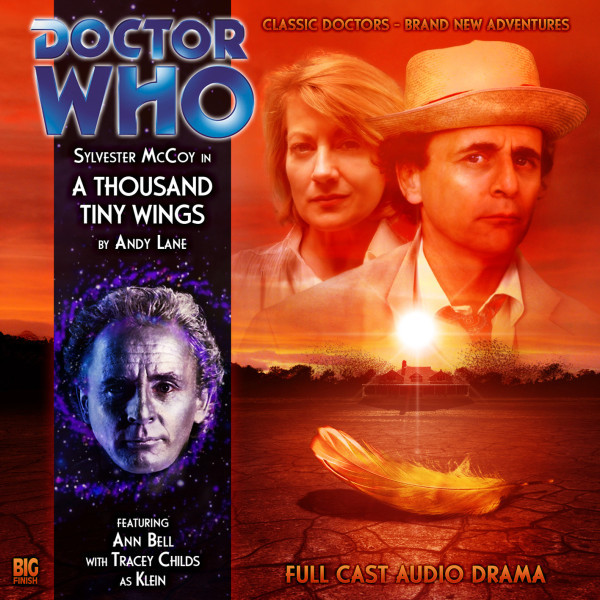
A Thousand Tiny Wings opens in the 1950s with the rot already baked in. The war is over, the flags have changed, but the ideology has not. In colonial Kenya, a cluster of British aristocrats cling to a stolen estate while the Mau Mau uprising burns closer through the jungle. They speak of fear, of savagery, of civilisation under threat, all with that horrifying clipped politeness that makes your skin crawl. Their belief in white genetic superiority is so casual it barely registers to them as belief at all. It is just the weather. And then, like a bad penny with a doctorate in genocide, Doctor Klein is there too.
Enter Sylvester McCoy’s Seventh Doctor, quietly furious, outwardly genial, absolutely not here to make anyone comfortable. Klein remembers him from Colditz. From her point of view he destroyed the correct timeline, the one where the Nazis won, and replaced it with this compromised version of history. Their ideological clash crackles through every exchange. Around them, people in the house begin to die. Bodies marked with dozens of tiny scratches. Whispers of something moving in the trees. Something watching. Something old.
The creature they find in the jungle, dubbed Abraham, is terrifying at first glance. Arboreal. Inhuman. Other. But the horror pivots, sharp and deliberate. Abraham is not the predator. He is the victim. He is a host species, enslaved and hollowed out by something far worse. A parasitic intelligence that treats him exactly the way the colonists treat Kenya. As resource. As breeding ground. As something lesser. The metaphor is not subtle, and thank God for that. Doctor Who has always been at its best when it looks you dead in the eye and refuses to blink.
With the Doctor’s nudging, Abraham fights back. Overthrows his oppressor. Claims agency. But the estate’s inhabitants do not get that chance. Their fates are sealed long before the first body hits the floor. The story invites you to wonder if recognition, remorse, or even doubt might have saved them. Then it answers the question. No. They never questioned the system that privileged them. They never examined the horror they normalised. Their end is not cruel irony. It is consequence.
This is what makes A Thousand Tiny Wings so powerful. The plot and the subtext mirror each other perfectly. Imperialism begets monsters. Eugenics eats itself. The Doctor stands as the moral axis, and McCoy plays him colder than usual. Distant. Strategic. Watching. He does not rage. He does not lecture. He lets the truth hang in the air until it suffocates everyone else. That restraint makes it devastating.
Big Finish are on fire here. The soundscape breathes. The jungle feels alive. The house feels claustrophobic. The music creeps under your skin and stays there. Every performance is pitch perfect, especially Klein, who is articulate, intelligent, and utterly monstrous without ever twirling a moustache. You almost like her. That is the point. That is the trap.
As the first part of Klein’s trilogy with the Doctor, this is a wild, confrontational choice. Travelling with a fascist is not meant to be comfortable. It is meant to be dangerous. And this is one hell of a beginning.
Final Thoughts
A Thousand Tiny Wings is fierce, unsettling, and morally uncompromising Doctor Who. It understands that the real horror is not the monster in the jungle. It is the ideas people carry like heirlooms.
5 out of 5 tiny scratches that just keep spreading.