

Before continuing, please be aware that all of this content is made possible by the goodwill and support of my backers on Patreon. If you enjoy the work on this site, please consider supporting the creation of more content like this by clicking the button.
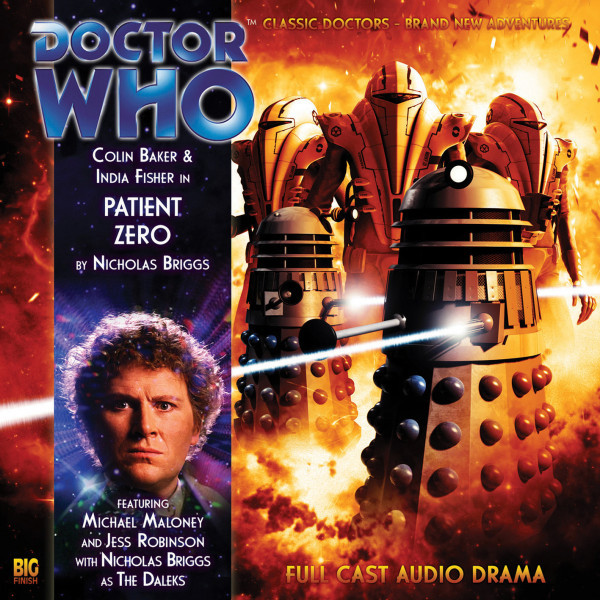
Patient Zero is one of those Big Finish stories that opens a door, calmly informs you that time is fake, feelings are optional, and consequences are forever, and then shoves you down a staircase made of ethical dilemmas. It is also the story where Colin Baker’s Sixth Doctor finally turns to Charley Pollard and goes “Right. Enough. Who the hell are you really?” and then, immediately, the universe pulls the emergency brake and drops Charley into a soap-opera coma like it’s 1986 and Bobby Ewing just walked into the shower.
Charley has been hiding her true nature for several adventures now, and the Doctor knows it. He confronts her. She is about to confess. Then boom. Coma. Virus. Curtains. When she wakes up, she’s in the Zero Room, and the Doctor casually drops that he’s been looking after her and searching for a cure for years. Actual years. Not “Doctor years” where that means twenty minutes and a montage, but full, grinding, lonely, obsessive Sixth Doctor years. It’s a huge, quietly devastating character beat, and Big Finish just lets it sit there, humming ominously, like a fridge you’re suddenly very aware of.
The hunt for a cure takes them to a starbase that is basically the galaxy’s most irresponsible bio-weapon cupboard. It’s run by Fratalin, a genuinely brilliant creation: a single consciousness spread across multiple bodies, all smaller versions of himself. One personality, many forms. It gives the base a full cast without fragmenting its authority, and it works disturbingly well. There’s a sense of calm, control, and quiet dread baked into every scene with him, especially once we learn the Viyrans are coming to wipe the place clean after the war. Everything here is temporary. Everything is already condemned.
Then the Daleks arrive, because of course they do, and decide that what this situation really needs is more genocide. They want the viruses to infect all of time, which is very on-brand and very tedious for everyone else involved. But here’s the trick: they’re not the most dangerous thing in the story. Not even close.
Once Charley starts recovering, she begins hearing voices in the TARDIS. Enter Mila, a disembodied survivor of a Dalek experiment that went wrong centuries ago. Intended to create Daleks, she instead lost her body and hid inside the TARDIS itself, lingering through incarnations like a ghost in the wiring. It’s creepy, tragic, and fascinating, and yes, it absolutely feels like the sort of idea later television writers would glance at and go “I’ll have that.” Mila is sympathetic, frightening, and understandable all at once.
The story detonates when Mila grows strong enough to become Charley. A doppelganger. A lie with Charley’s face. While the Doctor is busy juggling Daleks, plagues, and moral responsibility, he doesn’t see it coming. And then — cliffhanger. Dalek time explosion. Everything goes white. End of story. No resolution. Just the sense that something irreversible has happened.
Final Thoughts
This is big, bold, emotionally loaded Doctor Who that trusts its audience to keep up. The character work is superb, the ideas are rich, and the pacing is razor sharp. The only reason it isn’t perfect is because it slams the door shut mid-scream.
4.5 out of 5 sentient viruses that absolutely should not be left unattended