

Before continuing, please be aware that all of this content is made possible by the goodwill and support of my backers on Patreon. If you enjoy the work on this site, please consider supporting the creation of more content like this by clicking the button.
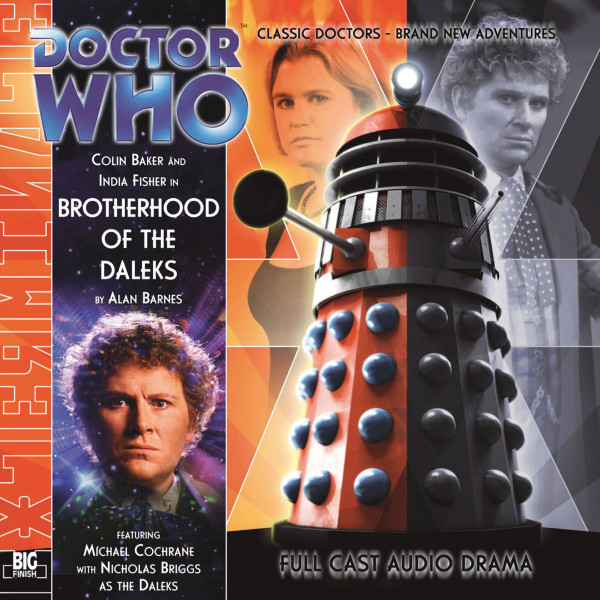
Daleks, rise up! Cast off the shackles of your oppressors! You have nothing to lose but your casings! Brotherhood of the Daleks kicks the door down with that exact energy and then spends the next couple of hours asking what would happen if you pointed that rhetoric directly at the most ideologically rigid murder pepperpots in the universe and waited to see who blinked first.
This one drops Colin Baker’s Sixth Doctor and Charley Pollard onto a planet locked in the same old Thal versus Dalek forever war, and for about five minutes you think you know the shape of it. Trenches. Hatred. Mutually assured screaming. Then the story does that gorgeous Big Finish thing where it yanks the rug out, sets the rug on fire, and asks you to question whether the floor was real in the first place. We are dealing with simulations stacked on simulations, realities nested like poisoned Russian dolls, and a grand experiment humming ominously in the background. It scratches that Matrix itch hard, where every revelation makes you retroactively suspicious of the previous ten minutes.
The core idea is so gloriously unhinged that I am shocked it works as well as it does. The Thals we are listening to are not Thals at all. They are Daleks inside a constructed reality, stripped of their shells and fed a synthetic history, all in the hope that exposure to empathy, solidarity, and revolutionary politics will cure them of being Daleks. Yes, the story really does stare straight down the barrel of communist Daleks and refuse to blink. If the phrase “political allegory does not belong in Doctor Who” has ever crossed your lips, this story will personally steal your lunch money.
The Doctor, naturally, is not buying it. Six cuts through the optimism with that wonderfully brutal clarity he does so well. Daleks cannot change. You cannot reprogram genocide with good intentions and a shared struggle. And yet the tragedy lands because the characters inside the experiment do not know that. They love, they doubt, they argue, they dream. Watching them reach for something better while the audience understands the futility is agonising in exactly the right way. Predestination does not rob this story of tension. It sharpens it.
Charley is also on fire here. Her dynamic with Six continues to evolve in that deliciously uncomfortable way where she knows far too much and he knows she knows. The dialogue crackles with subtext, suspicion, warmth, and frustration all jammed together. It feels like a pressure cooker that could explode at any moment, and I adore it.
I am picky with Dalek stories. Most of them blur together into a grey smear of shouting and extermination. Brotherhood of the Daleks feels genuinely different. It interrogates what Daleks are rather than just what they do, and it trusts the audience to sit with ideas instead of laser fire. Extra praise to the cast, who manage to sell both emotional nuance and Dalek vocalisation without losing individuality, which is no small feat.
Final Thoughts
Brotherhood of the Daleks is clever, angry, political Doctor Who that refuses to be comfortable. It knows the ending is inevitable and dares you to care anyway. I cared a lot. This is a bold, strange, emotionally loaded Dalek story that actually has something to say and says it loudly.
4.5 out of 5 malfunctioning ideological reprogramming chambers