

Before continuing, please be aware that all of this content is made possible by the goodwill and support of my backers on Patreon. If you enjoy the work on this site, please consider supporting the creation of more content like this by clicking the button.
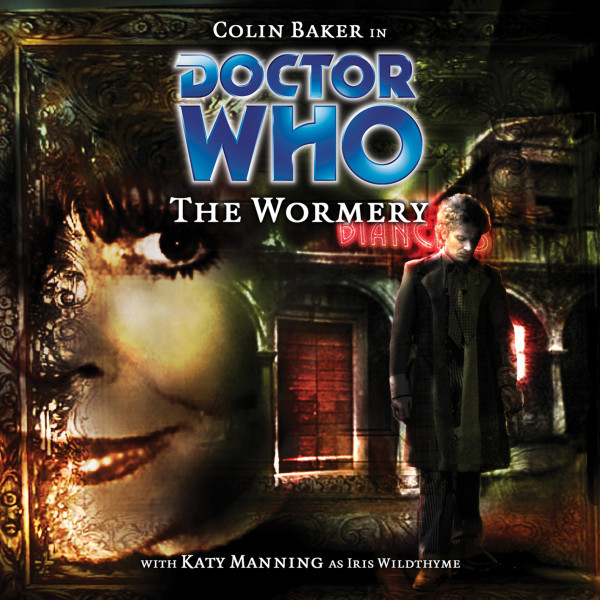
There’s one place in creation where the truth really can be found in the bottom of a glass: Bianca’s, a very special and very exclusive little club.
The Wormery is the palate cleanser after the mythic monsoon of Zagreus. Quick reminder: it’s the story that follows a Trial‑scarred Sixth Doctor walking into Bianca’s, a cabaret so decadent even Baudelaire would RSVP “hell yes.”
It kicks off with Mickey—one of the staff of the establishment—telling her tale to a Silent Stranger in a dark room several rooms after the events of the story? That stranger? Surprise, it’s Sylvester McCoy in a surprise cameo! Anyway, Mickey once worked at Bianca’s, a club dripping with sensual intrigue and deadly secrets. Bianca, the proprietress and headliner, is the kind of performer who demands attention and gets it—plus a slice of your soul. The Doctor drifts in for a quiet drink post‑trial but quickly finds himself cornered by Bianca’s gaze and chaos personified: Iris Wildthyme sashays in, sequins crackling, declaring she has a mission that only booze and bad decisions can fix.
Who the hell is Iris Wildthyme? Like Frobisher and Bernice Summerfield, Iris is the product of Doctor Who’s wilderness years. A renegade time lord who travels through time in a double-decker bus, she’s the kind of lady who’ll march up to you, bold as brass, decked out in fake leopard-skin and say “Ooh, ‘scuse me luvvie, I’m just going to park me keks right up ‘ere.” And then drink you under the table. She barrels into the scene as the butterfly with broken wings, and Colin Baker’s Doctor is reluctantly charmed into babysitting mayhem while peeling lies from Bianca and dodging wormhole politics.
Bianca’s bar, it turns out, isn’t just a trendy watering hole with good lighting—it’s also a trans-temporal sinkhole connected by wormholes to the squirmiest aliens this side of a compost bin. These worms whisper secrets, rewrite memory, and basically loiter like interdimensional gossip columns. Iris hears them. The Doctor suspects them. Bianca hosts them. And slowly, inevitably, we tumble into the big reveal: Bianca is Iris. Or rather, she will be. Maybe. It’s a metaphysical drag show of self-confrontation.
The story leans hard into identity, legacy, and the queasy idea of who we become when no one’s watching—or worse, when everyone is. Bianca isn’t a villain, not exactly. She’s a reflection. A possibility. A Time Lady version of the classic “what if I sold out and bought a nightclub to forget myself” crisis. The worms are laughable but effective, because they’re not the threat—they’re the Greek chorus. The real horror is being trapped in a version of yourself you can’t escape.
Colin Baker shines here, toggling effortlessly between melancholy and manic charm. He’s the Doctor on the rebound, bruised but still romantic. And Iris? She’s everything. Loud, vulnerable, hilarious. For once, not just comic relief, but a tragic heroine in her own disheveled right.
Final Thoughts:
The dialogue? Snappy. Clever. Camp as Christmas. There’s a deadpan sincerity to the entire script that flirts with farce but lands somewhere in elegy. It’s not groundbreaking, but it’s charming! Like the echo of a song you don’t remember learning but somehow know all the words to.
Four out of five gin-soaked paradoxes.