

Before continuing, please be aware that all of this content is made possible by the goodwill and support of my backers on Patreon. If you enjoy the work on this site, please consider supporting the creation of more content like this by clicking the button.
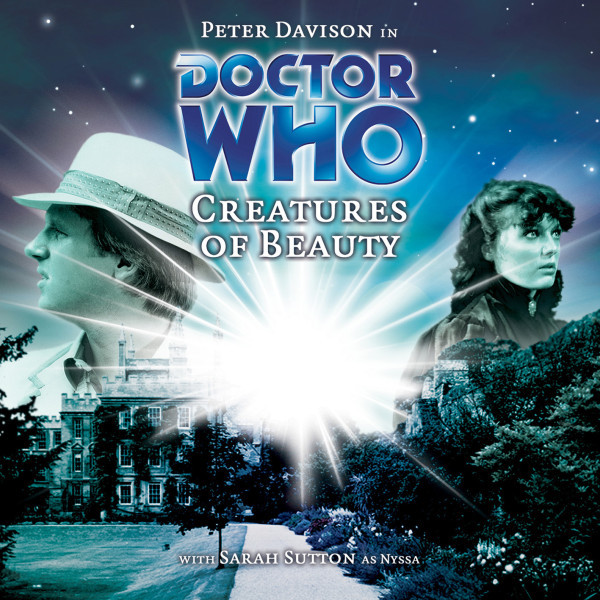
The Doctor and Nyssa land on Veln, a planet decades after a Koteem-polluted waste ship unleashed dyestrial toxins. They’re immediately arrested. Nyssa is detained for being “too beautiful,” a designation that brands her as an outsider in a society where scars equal status. The Doctor is interrogated, the TARDIS malfunctioning, the situation a mystery—fragments of guilt and accusation swirling without explanation.
The narrative is deliberately fractured. Scenes play out of order, characters reference events we haven’t heard yet, and dialogue arrives before its context. It’s very Pulp Fiction in structure: emotional payoffs reveal themselves backward, forcing us to piece together the cause from the effect. It isn’t just stylised—this non-linear presentation echoes the story’s theme of retrospective responsibility and murky morality.
Veln’s society is a nightmare sculpted by ecological devastation. Dyestrial pollution warped genetics across generations, creating visible mutations and irreparable deformity. The “unmarked,” the cosmetically unscarred elite, use beauty as both shield and weapon. Those visibly changed endure segregation, surgery, or disappearance. Veln has reshaped ways of life—identity, trust, even language—around physical appearance. It is a social mutation born of environmental collapse.
That dystopia recalls The Twilight Zone’s “Eye of the Beholder”—where beauty was dictated by conformity, and deformity punished by exile. But where Zone crude moralizes, Creatures of Beauty leaves no neat lesson. On Veln, ugliness becomes institutional. Surgery is survival, not self-expression. The Koteem’s offer of genetically healing transplants (at the cost of the donor race) raises ethical horror—none of it feels like salvation.
Performances are uniformly excellent. Peter Davison’s Doctor is muted, perplexed, subtly repulsed by systems he can’t untangle. He’s unmoored by events he doesn’t yet fully understand. Sarah Sutton’s Nyssa carries grief, principle, and growing distrust. Her composure gives way to despair in one chilling knife scene. David Daker (Gilbrook) is a brooding idealist turned authoritarian, his unspoken bitterness fueling the planet’s paranoia. David Mallinson’s psychologist Brodlik navigates interrogation with clinical detachment. The Koteem, voiced by Nicholas Briggs, shift between benign and ominous. Every character feels cruically shaped by trauma and inherited disaster.
By part three most of the plot is revealed; part four fills in the gaps. Many listeners anticipate the twist—the Doctor’s inadvertent role in causing the dyestrial spill via TARDIS collision—early. But the non‑linear ordering drips the shock slowly enough that emotional resonance isn’t lost, only deepened. The tragic irony: the Doctor and Nyssa are witnesses to a genocide they actually caused, without knowing it. Their departure is quiet. No resolutions. No apologies. Veln remains irrevocably broken.
Final Verdict:
Creatures of Beauty is a chilling, intelligent meditation on ecological ruin, beauty as power, and the collateral damage of good intentions. It uses its fractured structure not just for novelty, but to reinforce themes of causality, trauma, and hindsight. A rarity in Doctor Who: a story where the Doctor fails irrevocably, leaving a world scarred by his unknowing footprints.
Rating: 4 out of 5 cosmetic sterilization clinics