

Before continuing, please be aware that all of this content is made possible by the goodwill and support of my backers on Patreon. If you enjoy the work on this site, please consider supporting the creation of more content like this by clicking the button.
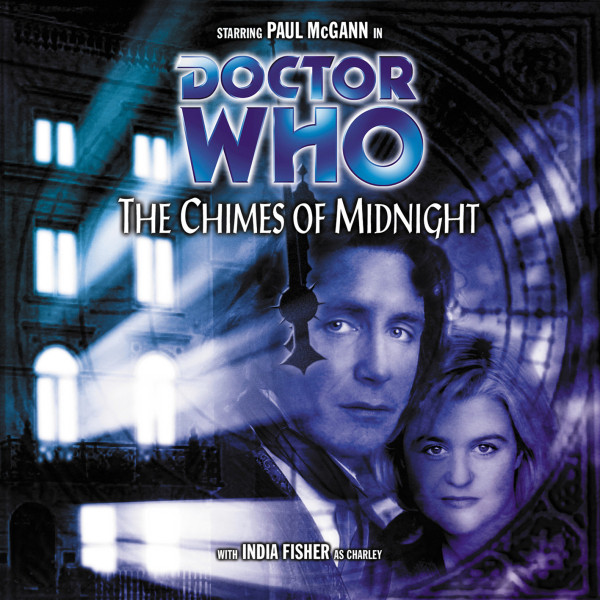
There are haunted houses, and then there’s The Chimes of Midnight—a story that doesn’t just creak with ghosts but is a ghost. A ghost of trauma. A ghost of social rot. A ghost of Christmas Eve looping forever inside the walls of some horrible Edwardian purgatory where death is just something that happens to maids before pudding is served.
The Eighth Doctor and Charlie land in this temporal knot on what should be a festive evening, and within about eight seconds you realise the festive cheer has been quietly strangled in the pantry. Everything’s wrong here. The air feels thick. The clocks don’t chime right. The characters—if you can call them that—repeat themselves like corrupted Sims. Welcome to hell. It’s upstairs-downstairs and no one has any agency.
This is gothic horror, sure, but not in the usual ‘ooh there’s a candle in the fog and someone’s wearing lace’ kind of way. This is existential horror, coated in the aesthetic of murder-mystery radio theatre. And it’s so absurdly, effortlessly good at what it’s doing that you barely even realise you’re holding your breath for entire scenes.
Robert Shearman’s script is a layered, cruel, exquisite little Matryoshka doll of class criticism, identity, and emotional suppression. It pretends to be an Agatha Christie murder loop, but that’s just the sugar on the razor blade. What it really wants to talk about is what happens when you’re so defined by the role society forces on you that you forget how to be a person. And what it really wants is to put Charlie front and centre and tear her wide open, lovingly, brutally, and completely.
India Fisher is absolutely unreal in this. Charlie starts the story confused and cheeky, as usual, but by the time the loop is tightening and the deaths are hitting too close to home, she’s cracked open. Her performance goes from charming companion to someone being methodically unmade. And Paul McGann? He’s sublime. One part romantic poet, one part panicked parent. His Doctor is clearly terrified of what this place is doing to her, but he never quite lets the mask fall. It’s more heartbreaking that way.
The sound design deserves awards. Not metaphorically. Like, actual awards. Every tick of the clock, every echoing footstep, every dribble of blood or whisper behind the wall is placed with surgical precision. It doesn’t feel like you’re listening to it—it feels like the house is whispering to you directly.
If there’s one flaw, it’s that Chimes is so effective it might ruin other audios for you. It sets a bar most stories never reach, and it does it without yelling. It just creeps in through the servant’s door and sits beside you in the dark.
Final Verdict:
This isn’t just one of Big Finish’s best. This is Doctor Who at its most daring, most devastating, and most deeply human. A perfect ghost story. A perfect tragedy. A perfect Christmas treat.
5 out of 5 Very Naughty Plum Puddings