

Before continuing, please be aware that all of this content is made possible by the goodwill and support of my backers on Patreon. If you enjoy the work on this site, please consider supporting the creation of more content like this by clicking the button.
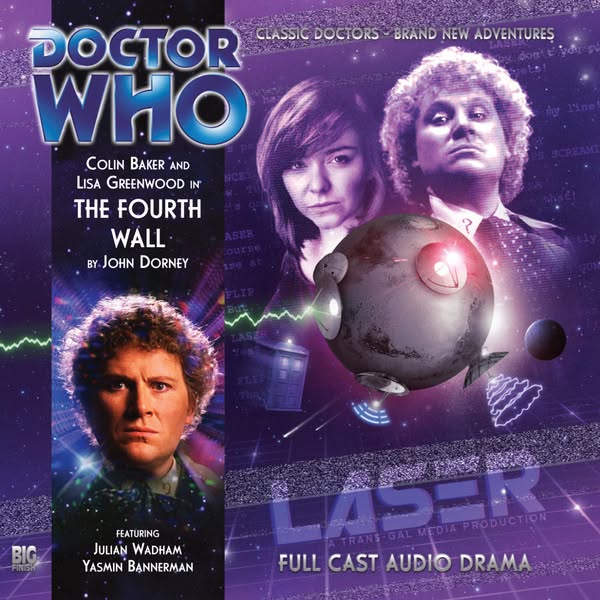
The Fourth Wall takes one look at reality, points at it accusingly, then climbs through a hole in the script and starts punching continuity in the face. Which is exactly the sort of gloriously stupid premise that can either become a masterpiece or an absolute train wreck. Thankfully, it mostly lands on the right side of that divide.
This time around, Colin Baker’s Sixth Doctor and Flip Jackson stumble into a corporation that’s using alien technology to create television programmes. Not television programmes about fictional events, mind you. Actual alternate realities where those events genuinely happen.
Imagine if every soap opera, crime drama, and prestige streaming series was secretly generating a parallel universe full of people doomed to suffer because somebody in a writers’ room thought it would boost ratings. Congratulations. You’ve invented existential horror television. And honestly? For the first half, this concept is carrying the story on its shoulders like a weary labourer dragging a grand piano uphill. Because it’s a REALLY good idea.
There’s a lot of fun philosophical territory here. What responsibility do creators have toward their creations? If a fictional person becomes self-aware, are they still fictional? If an entire reality exists purely because somebody wrote a script, what rights do its inhabitants possess?
It’s all got a distinctly Blade Runner flavour to it. Artificial people questioning their existence. Manufactured realities. The uncomfortable ethics of creating life for entertainment. And, considering we’re now living in a world where people happily generate endless AI-created images and stories without thinking twice about the implications, the whole thing feels surprisingly modern despite being released years before that conversation became unavoidable.
Then the story remembers it’s a Doctor Who adventure and decides to get very silly. The villain of one of these manufactured shows becomes aware he’s fictional. Good setup. He breaks through into reality. Still good. He decides to destroy the universe… because. Just because. Because that’s the way characters like him are written in fiction, and this story’s writer knew that and decided to poke some fun at it.
This is a comedy first and foremost. A big, cheeky, self-aware comedy that spends much of its runtime poking fun at television conventions, storytelling mechanics, and the relationship between creators and audiences.
It genuinely reminds me of Red Dwarf: Back to Earth at times. Not necessarily in terms of plot, but in spirit. That same willingness to acknowledge the audience, play with meta concepts, and occasionally disappear up its own narrative backside for a joke. Fortunately, unlike some meta-fiction, it never becomes insufferably pleased with itself.
A lot of that comes down to the cast. Colin Baker is having an absolute blast. His Sixth Doctor thrives in stories that let him be witty, theatrical, and mildly exasperated by everybody around him. Meanwhile Flip continues to settle into the companion role nicely. She’s still finding her identity as a character, but her straightforward practicality works well against the Doctor’s larger-than-life personality.
Thematically, the story revolves around authorship, identity, and the nature of reality itself, but it never lingers too long on the heavier questions. Sometimes that’s a weakness. Sometimes it’s exactly the right choice. Here, it mostly works. I just wish the final villain had been given the same level of thought as the premise that created him.
Final Thoughts
A clever, funny, and delightfully meta adventure packed with strong ideas about fiction, reality, and creation. The central concept is far more interesting than the underdeveloped villain, but the humour, performances, and sheer inventiveness keep things entertaining throughout.
4 out of 5 self-aware television villains angrily escaping their own cancellation notices