

Before continuing, please be aware that all of this content is made possible by the goodwill and support of my backers on Patreon. If you enjoy the work on this site, please consider supporting the creation of more content like this by clicking the button.
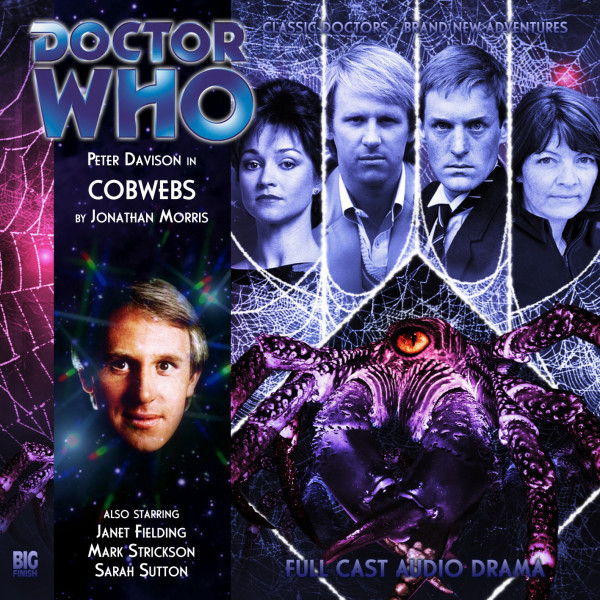
Cobwebs should be a warning. Cobwebs should be a trap. Cobwebs should be something delicate and sinister, stretching across dark corners of time, waiting for the unwary to stumble in.
Instead, Cobwebs mostly just… hangs there.
This is the third outing in the Fifth Doctor reunion era, throwing the Fifth Doctor into a TARDIS crammed with familiar faces. Nyssa is already stationed on a plague research base. Tegan Jovanka is bristling. Vislor Turlough is being slippery. It is the Davison era in microcosm. Crowded. Slightly fractious. Full of potential character drama that never quite ignites.
And then we get the hook.
Four skeletons. Sealed away. Dressed exactly like the Doctor and his companions. Dead for decades.
That is not just a good idea. That is a fantastic one. That is the kind of premise that should have you leaning forward in your chair, eyes wide, heart thumping. Predestination paradox. Fixed point tragedy. The inevitability of death staring the Doctor in the face in the most literal way possible.
For a hot minute, Cobwebs feels like it understands this. There is genuine unease. The Fifth Doctor’s quiet horror lands beautifully. You can almost taste the existential dread.
And then the story panics.
Suddenly we have evil corporations wiping the memories of their scientists so they can secretly weaponise the plague and sell the cure to the highest bidder. We have a traitor in the ranks. We have a station computer that has been driven into depressive self destruct mode because the Doctor tinkered with it. We have spider-like cleaning robots skittering around the corridors.
None of these ideas are bad. In isolation, some are rather juicy. The commodification of illness is an evergreen theme. The notion of corporate overlords engineering suffering for profit is depressingly contemporary. The mad computer could have been a haunting exploration of artificial consciousness and responsibility.
But together, they feel like padding. Like the script does not trust its own central concept enough to sit with it.
And when the truth about the skeletons finally lands, that they are not the TARDIS team at all but crude reconstructions assembled by overzealous cleaning robots who mistook organic residue for litter, it is less twist and more damp squib. Technically clever. Emotionally inert.
The cast try. They really do. Peter Davison brings that gentle, weary decency that makes his Doctor so human. Sarah Sutton continues to be effortlessly empathetic. Janet Fielding snaps with fire. Mark Strickson oozes ambiguity. But the script gives them precious little to do beyond bicker and react.
The tragedy of Cobwebs is that it gestures toward something profound. Identity. Mortality. The terror of confronting your own remains. The responsibility of knowledge. It almost dares to ask what it means to see your own ending laid out in front of you.
And then it blinks.
Final Thoughts
A story with one absolutely killer idea at its core, smothered under unnecessary subplots and capped with an ending that feels like narrative housekeeping. There are strands here that could have formed something intricate and devastating. Instead, they tangle, sag, and snap.
2.5 out of 5 existentially confused spider bots.