

Before continuing, please be aware that all of this content is made possible by the goodwill and support of my backers on Patreon. If you enjoy the work on this site, please consider supporting the creation of more content like this by clicking the button.
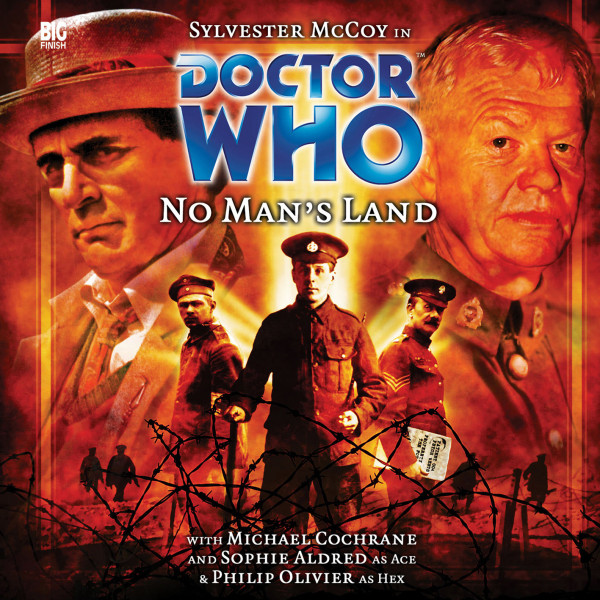
No Man’s Land drops the Seventh Doctor, Ace and Hex onto the horror-charred terrain of World War One. They’re supposed to solve a murder in the trenches (not just the war casualties) and at first it feels like “Doctor Who in khaki” – shellshock, mud, fog, the usual. Straightforward, you think. That’s the vibe.
Then the weird creeps in. The ever-present static hum in the background that erupts when a soldier snaps. The “daily hate hour” the English troops endure – feels more dystopian experiment than trench routine. The murder doesn’t happen when you expect. The hospital ward hides more than shrapnel wounds. Piece by piece the story unravels: this is not simply the Great War. It is a front for covert English army mind-control experiments inside a hospital for the broken. By the time you clock it, the puzzle pieces are already shifting into place.
It’s smart. The reveal doesn’t come with trumpets; it sneaks in while your guard is down. A hospital ward haunted by shell-shock is familiar, but this one is haunted by something else: surveillance, conditioning, a body-count of lab rats. The Doctor, who’s waded through horrors before, seems almost pleasantly unprepared. Ace’s fire, Hex’s compassion and confusion—they anchor you while the horror bleeds through. McCoy’s Doctor alternates between face-palm irony and gaping horror at what “civilisation” has done in the name of war.
Because yes the war setting works, but the true terror is human cruelty wearing a lab coat. The themes: trauma, authority, the war machine not just on the battlefield but in the hospital corridors. Memory-fracture, guilt, how easily sacrifice becomes manipulation. Soldiers broken in body become broken in mind. Experiments justified because “the enemy must be beaten” but secreted behind white sheets.
Production wise it’s solid. Fog of war effects, distant shelling, eerie hospital hushes—sound design gives it weight. Yet the pacing takes a hit – once you’ve twigged the twist, the story rushes to tidy up. The reveal’s satisfying but short-lived. There isn’t enough fraying after the twist, not enough of the Doc picking at the wound of what has been done. The resolution leans too “we stopped it” rather than “we’re forever changed.”
Final thoughts:
If you like your Doctor Who to yank you into muddy boots and then plant you in a moral swamp, this one delivers. But it teases higher ambition than it fully completes. I certainly wouldn’t book a tour with this Doctor—between Colditz, The Settling and No Man’s Land I suspect he thinks “holiday” means “horror show.”
Rating: 3.5 out of 5 field-hospital monitors buzzing with secrets.